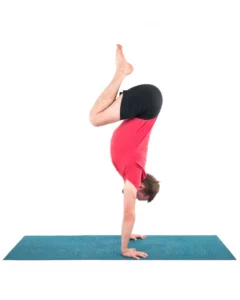

A yoga teacher colleague recently posed these questions: How can yoga reduce the likelihood of organ prolapse in middle-aged mothers with at least one child? Can yoga serve as a therapy to those who have had the surgery and are looking to improve the situation? What cautions might a woman in this situation practice in order to protect against organ prolapse?
There is certainly a role that yoga can play in the management of reproductive organ prolapse. But there are also some poses, movements and breathing methods that could potentially exacerbate the condition.
What is Organ Prolapse?
Wikipedia defines the term prolapse as “to fall out of place.” There can be different kinds of prolapses. The bladder, intestines, bowel, uterus or vaginal walls can “fall” or collapse downward. A prolapse of one of these organs results when there is too much intra-abdominal pressure in the abdominal and pelvic cavities. This causes a downward force that the pelvic floor muscles (PFMs) and surrounding connective tissue are unable to support. The organs can even fall down through the vaginal opening.
A Condition with Many Causes
It is beyond the scope of this post to outline the causes of a prolapse. But it is important to clarify the common misconception that prolapses are caused by weak pelvic floor muscles. Yes, if the pelvic floor muscles are weak, they won’t be able to hold or support the downward force of these organs. This can lead to an increase risk of a prolapse when the intra-abdominal pressure rises.
However, there are other connective tissue structures like fascia and ligaments that help hold all of our pelvic organs in their respective space and place. You can imagine if these structures are damaged during childbirth, or if one of these organs is removed, as in a hysterectomy, that it will change the support system in the entire cavity. This is important to understand because it will dictate how you address the prolapse with yoga or other exercises.
Organ Prolapse and Yoga
In order to answer the teacher’s questions, we need to look at some yoga poses that might help improve support within and surrounding the pelvic and abdominal cavities without increasing an unfavorable amount of pressure. We also need to look at ones that might cause an unwanted increase in the intra-abdominal pressure, potentially increasing the possibility of organ prolapse.
Poses to Rethink or Avoid
Intense Core Poses
Poses that tend to unfavorably increase the intra-abdominal pressure (IAP) are some of the intense core poses such as Boat Pose (Navasana); Four-Limbed Staff Pose (Chaturanga Dandasana); Plank Pose (Phalakasana), on elbows or hands; or variations of these poses.
Abdominal Lock (Uddiyana Bandha)

Abdominal Lock (Uddiyana Bandha) forcibly and considerably increases the intra-abdominal pressure and can exacerbate organ prolapse.
Forward Bending Poses with Legs Abducted
Depending on the severity of the prolapse, forward bending poses with the legs abducted (wide apart) may increase downward pressure in the pelvic cavity that the pelvic floor muscles cannot support. This includes poses such as Garland Pose (Malasana), Wide-Legged Forward Bend Pose (Prasarita Padottanasana), Extended Child’s Pose (big toes are touching, heels and knees are wide apart, and arms extending forward).
Flow Yoga Transitions with Jumping
Repeated jumping consistently increases the downward force.
Breath Holding
If any yoga pose causes you to strain and hold your breath, then this can cause an increase in the intra-abdominal pressure. Proper breathing during yoga practice or other activity is always important for pelvic health and overall health of many systems of your body!
Breath of Fire
Avoid Kapalabhati Pranayama (vigorous abdominal contractions during breathing practice.
Lifting and Pushing
Avoid activities such as heavy lifting or “pushing” (as in constipation). Lifestyle choices, such as forcing yourself to take several trips to unload groceries, and nutritional changes to increase bowel motility and softening may be helpful.
Poses That Can Reduce Symptoms
Elevate Your Hips
Practice Legs-up-the-Wall Pose (Viparita Karani), Supported Bridge Pose (Setu Bandha Sarvangasana), Reclined Bound Angle Pose (Supta Baddha Konasana), Supported Shoulderstand Pose (Salamba Sarvangasana).
Reverse Kegel
Focus on awareness of the pelvic diaphragmatic breath or Reverse Kegel. Many people experiencing a prolapse assume that their pelvic floor muscles are loose and need to be tightened. However, Jocelyn Unger, a PT pelvic health specialist at the University of Arizona Health Network agrees that the majority of women she treats that have weak and ineffective pelvic floor muscles. But also that they demonstrate tight pelvic floor muscles. For this reason, she, along with many of the leading pelvic health specialists, recommend focusing first and foremost on the relaxation and release of the pelvic floor muscles before learning to engage and activate.
Breathe
It is important to ensure you are breathing effectively and not holding your breath in all your yoga poses. That is also true for all your activities of daily living. Breath holding can increase strain and pressure against the pelvic floor. However, you must be even more mindful of effective breathing strategies in standing poses. Because the force of gravity pulls downward, standing may be a somewhat precarious position if the prolapse is moderate to severe.
Mountain Pose and Chair Pose
Practice Mountain Pose (Tadasana) and modified Chair Pose (Utkatasana) with a block between the thighs, to ensure proper postural alignment. Alignment of the spine and pelvis can influence the position of the abdominal and pelvic organs. It can also influence the effectiveness of the pelvic floor muscles’ ability to contract. Ensuring you have a natural low back curve with a neutral pelvic alignment in your standing poses is important. An assessment from your physical therapist can help you determine where your optimal lumbo-pelvic position should be. Modify the Chair Pose simply by not squatting down as far so that there is no extra unwanted downward pressure.
Calming Pranayama
Pranayama (breathing methods) that calm the nervous system can be beneficial. They can help address anxiety that sometimes causes you to hold tension in the pelvic area. Alternate Nostril Breathing (Nadi Shodana), Abdominal-Diaphragmatic breathing (Belly Breath) and Bee’s Breath (Bhramari) may be useful.
A Breathing Practice to Help relieve symptoms of Organ Prolapse
Once you have practiced pelvic diaphragmatic breath awareness and learned to release the pelvic floor muscles, then you may be ready to start a gentle engagement of the pelvic floor muscles as you exhale.
- Lie on your back with your knees bent and feet flat on the mat, or sit upright in a comfortable position.
- As you inhale, allow your belly to naturally move out.
- As you exhale, very gently draw your lower belly inward, keeping your spine and pelvis neutral.
- Inhale and relax, allowing your belly to soften.
- During the next exhalation, you can try to add a gentle lifting sensation of the pelvic floor. This is an extremely subtle movement, but is the beginning of learning how to incorporate gentle core activation movements, which may be part of your overall prolapse yoga program.
Exercise Caution
I recommend seeking a health care professional who can help you accurately activate these muscles before you start engaging them in your yoga practice, as research shows they often are not engaged properly in group settings.
It is important to understand that these poses do not treat a prolapse. There are a variety of causes, severities and treatment options for different prolapses, so it is wise to follow advice from your health care practitioner as to which treatment approach is best suited for you and your specific case.
Can Yoga Prevent Organ Prolapse?
Finally, our reader asked about using yoga to prevent organ prolapse for her students. It is inaccurate for me to say these exercises will help prevent a prolapse, because there are truly so many different factors that contribute to prolapse, some of which we can’t control. Therefore, it would be almost impossible to pinpoint the cause that may be unique to each of your students. However, if you take into consideration some of the above tips and recommendations, this may help reduce some of the risk factors. I would strongly encourage all women to visit a physical therapist who specializes in pelvic health PT at any stage in life. A PT can assess their alignment and pelvic floor health can be individually, and can implement a home care program unique to their needs.
Find a Pelvic PT
A visit to your pelvic health specialist does not need to be only when a dysfunction arises! As a yoga teacher, it would be helpful if you could find a pelvic health PT in your area that you can team up with. They can guide you in assigning individual home yoga programs for your students with prolapse concerns. The PT could assess each woman and then communicate with you what areas need to be addressed. This would be a great preventative and health-creation approach. You can find pelvic PTs in online directories.
This article is not intended to act as medical advice, nor to diagnose or replace your current treatment. Please seek clearance and guidance from your licensed healthcare professional prior to participating in any of the tips, advice, practices or movements mentioned in this article.
Reprinted with permission from Yoga for Healthy Aging.
 Shelly Prosko, PT, PYT, CPI is a Physical Therapist and Yoga Therapist, Shelly is dedicated to bridging the gap between yoga and modern healthcare philosophies and believes it is essential in order to create and sustain optimal health. She received her Physical Therapy degree at the University of Saskatchewan, Canada, and her medical therapeutic yoga training at Professional Yoga Therapy Studies in North Carolina.
Shelly has been integrating yoga into her physical therapy treatments since 1998, addressing a wide variety of conditions including chronic pain. Currently, she travels across North America offering specialty Physio-Yoga Therapy workshops, lecturing at Medical College programs, instructing at Yoga Therapy Trainings, presenting at International Conferences and actively promoting the integration of yoga therapy into our current healthcare system. Shelly is dedicated to inspiring, empowering and educating health professionals, yoga teachers, therapists, students and people in pain about ways yoga can be used safely and effectively to address a variety of health issues and improve quality of life. Please visit www.physioyoga.ca for more information.