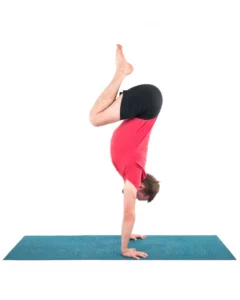
Boat Pose (Navasana): A Smarter Path to Core Strength
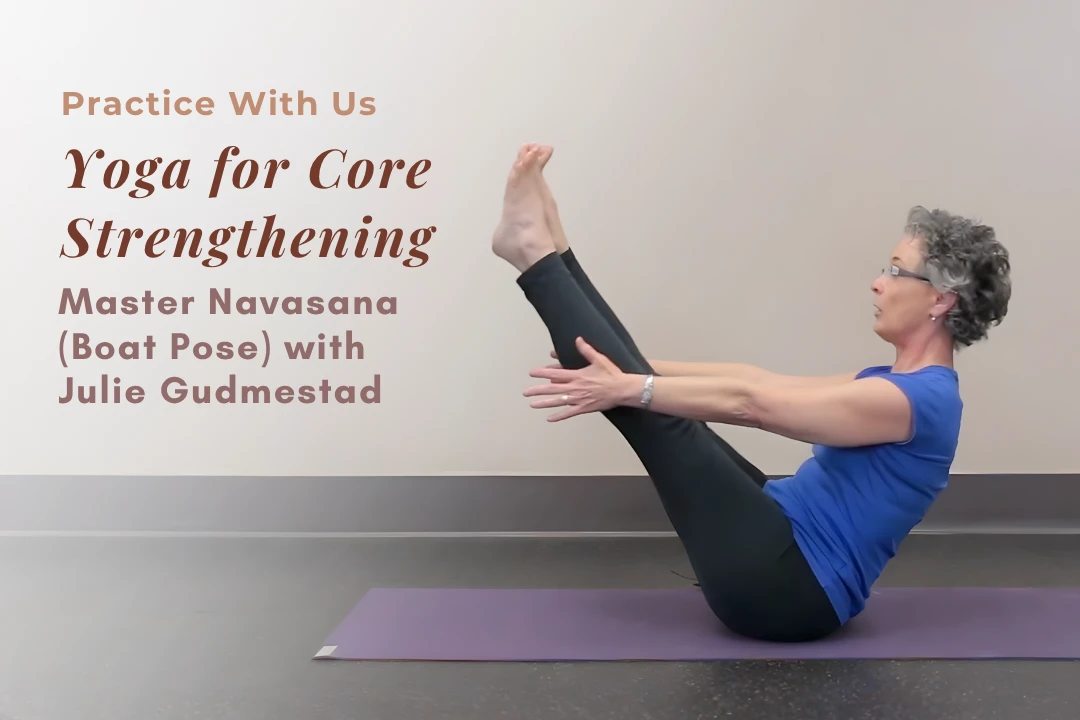
Boat Pose (Navasana) has a reputation for being a test. Something you either pass or fail depending on how strong your core already is. If you've ever lifted your legs, felt your lower back round, and quietly decided the pose wasn't for you — that experience makes complete sense. The problem isn't your strength. It's that most approaches to Boat Pose skip the preparation that makes the full expression possible.
Building Boat Pose Strength from the Ground Up
What most practitioners don't realize is that Navasana isn't a single shape. It's the final destination of a progression. The muscles that hold you up in Boat Pose — the hip flexors, the erector spinae along your spine, and the deep core stabilizers — don't activate well when asked to do everything at once. When you approach the pose in stages, each step wakes up exactly the muscles you'll need for the next one. That's not a workaround. That's how progressive strength training actually works.
What Julie Gudmestad Covers in This Practice
The tutorial begins well before Navasana appears. A wide-stance Downward Facing Dog opens the hamstrings and trains your body into the V-shape the pose requires. Cobra Pose (Bhujangasana) activates the back extensors that keep your chest from collapsing when you lift. Supported hamstring stretching — using a ledge or chair — addresses one of the most common reasons legs won't straighten: not weakness, but tightness that pulls the pelvis under.
From there, supine leg-lowering work warms up the hip flexors in a controlled way. They're ready to hold your legs up without recruiting your low back as a substitute. The pose itself arrives in three stages: feet on the floor first, then bent knees lifted, then the full expression with straight legs. Wall support is available throughout. Transitions between Paripurna Navasana (Full Boat) and Ardha Navasana (Half Boat) teach you to work dynamically rather than just hold and hope. The practice closes with a supported Bridge Pose to decompress the spine.
By the time you arrive at the full pose, your body has already rehearsed every element of it. The lift feels earned — not forced.
Watch Julie Gudmestad guide you through the full tutorial below.
If you want more practices that meet you where you are and build toward something real, subscribe to the YogaUOnline YouTube channel. New tutorials go up regularly, and Boat Pose is just the beginning of what your core can do.