Rhoda Miriam: Chair Yoga for Beginners — Proper Setup & Alignment
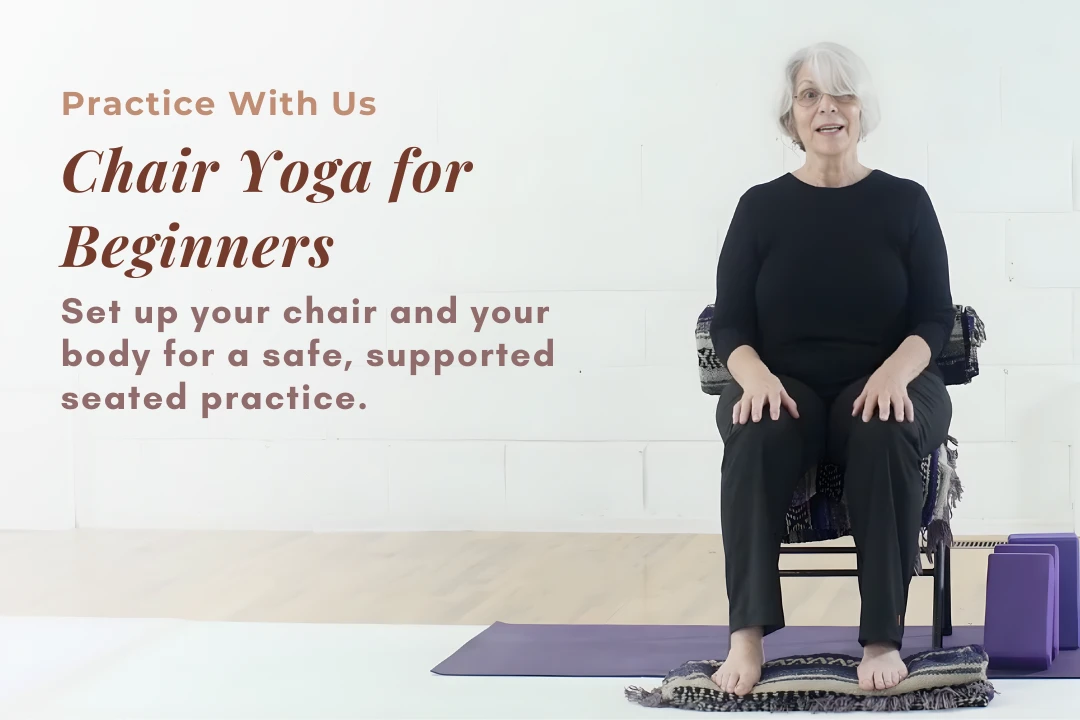
You don't need a yoga mat on the floor to have a meaningful yoga practice. For many people — whether dealing with limited mobility, recovering from injury, or simply wanting a gentler entry point into movement — a chair is all you need.
In this short introductory video, Rhoda Miriam walks you through how to set up your chair and your body for a safe, supported seated yoga practice. It's the foundation of her program she calls Yoga for Slow Living — a practice philosophy built around slowing down, breathing with awareness, and giving yourself genuine permission to relax.
Choosing the Right Chair
Not every chair works equally well for yoga. Rhoda recommends one that's firm enough to support you without sinking — so your favorite couch or a deep cushioned armchair won't do the job here. You also want to make sure the chair is on a non-slip surface, either a yoga mat or any flooring that keeps it from sliding during movement.
The goal when you sit down is to have your thighs roughly parallel to the floor, with your knees at or slightly below hip level. This position allows your spine to maintain its natural curves — the gentle inward curve at the low back and the corresponding curve at the back of the neck — which is what makes movement both safe and effective.
Simple Props That Make a Big Difference
One of the most practical aspects of this introduction is Rhoda's guidance on props — and how everyday household items can substitute for anything you don't already own.
If your legs are shorter and your knees drop below your hips, placing your feet on something slightly raised helps restore that parallel thigh position. Half-size yoga blocks work well for this, but so do stacked books (just make sure they're level) or a folded yoga blanket for a smaller lift. If your legs are longer and your knees sit higher than your hips, placing a folded blanket on the chair seat raises you up enough to find that neutral alignment.
Rhoda also introduces a simple lumbar support technique: rolling a blanket and placing it at the curve of the low back. It's a small adjustment that makes a noticeable difference — not just for yoga, but for anyone who spends long hours sitting at home or at work.
A Different Way of Sitting
What distinguishes sitting for yoga from sitting on the couch is intention. As Rhoda puts it, we're not in “couch potato mode” — we're creating the conditions for the spine to lengthen, for breath to move freely, and for the body to be both relaxed and alert at the same time. That balance — ease without collapse — is at the heart of what chair yoga makes possible.
This video is the starting point for Rhoda's full chair yoga series. Once you're set up comfortably, you're ready to begin.