Forearm Balance: Finding Your Vertical Line Without the Shoulder Risk
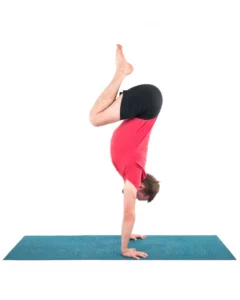
Forearm Balance (Pincha Mayurasana) has a reputation for being a pose you either have or you don't — something that arrives one day when you finally get brave enough to kick up hard and hope for the best. But that approach is precisely what makes Pincha Mayurasana so frustrating to work toward, and so easy to get wrong. The real obstacle isn't courage. It's that most practitioners skip the foundation entirely and then wonder why the pose feels unstable, effortful, or just out of reach.
What the pose actually demands isn't a dramatic leap of faith — it's a very specific kind of shoulder strength that most of us haven't built yet. Your shoulders need to be able to support your full body weight overhead while actively pressing down into the floor at the same time. That downward press through the forearms is what lifts your shoulders away from the ground and creates the structural support the rest of the pose depends on. Without it, the weight collapses into your joints rather than traveling through your muscles — which is where most shoulder strain in this pose originates.
Starting with Dolphin Pose
Tias Little begins with Dolphin Pose, which isn't a warm-up so much as the pose itself in disguise — the same forearm position, the same shoulder action, the same core demand, just with your feet still on the floor. He covers the details of forearm placement, whether elbows are directly under your shoulders with forearms parallel or hands interlaced, and guides you through the pressing-and-lifting action that makes the difference between hanging in the pose and actually holding it.
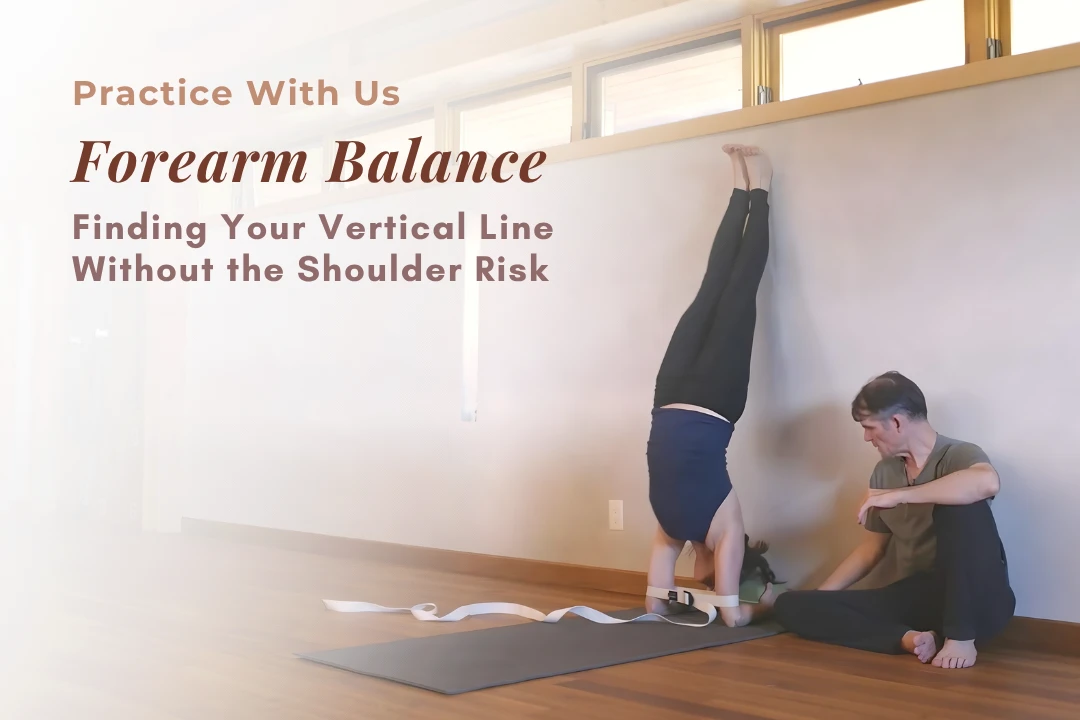
From there, he shows you how to walk your feet progressively closer to your elbows, shifting weight into your arms gradually rather than all at once. At the wall, he demonstrates how to kick up with control and use the wall as feedback — something to find your vertical line against, not something to collapse into. The work of engaging your core to avoid the banana-back shape gets attention too, because that hollow lower back isn't just aesthetically off — it's a sign that the load has shifted away from where your body can actually manage it.
The Only Way to Forearm Balance Pose
Working this way — methodically, at the wall, with Dolphin as the building block — isn't the slow route to Forearm Balance. It's the only route that produces a pose your body can actually sustain. The practitioners who skip this stage tend to plateau, because what looks like a balance problem is almost always a strength problem in disguise. Building that foundation means that when you do find the vertical line from elbows through hips to feet, you're not white-knuckling it. You're holding it.
Watch Tias Little guide you through the full tutorial below.
If building a safe, sustainable inversion practice is part of your yoga goals, subscribe to the YogaUOnline YouTube channel — there's a full library of foundation-first tutorials focused on shoulder health and real inversion readiness waiting for you.