Yoga breathing practices, or pranayama, have been based primarily on tradition, which varies greatly from one branch of yoga to another. The ranges of breathing practices are mind-boggling and can often leave yoga students wondering, “How important is a pranayama practice? And “What is the best way to start?”
In my experience, most yoga students do not breathe well, at least not at the start of their yoga journey. Ever notice how your shoulders end up close to your neck at the end of a busy day? If you answered yes, then you have become aware of a typical breath holding pattern resulting from the stress response of the sympathetic (fight-or-flight) nervous system.
Typically years of asana practice is recommended before a student embarks on a pranayama practice. However, yoga breathing exercises can be a tool to create mental clarity, deepen our meditation practices, and offer us many health benefits at any level of practice.
According to Dr. Timothy McCall, “the breath is probably the simplest, best way to affect the autonomic nervous system, which in turn controls the function of every internal organ, as well as systems like digestion and immunity.”
New Research on the Health Benefits of Yoga Breathing
In the September issue of Bottom Line Health, there was an article dedicated to some newly researched benefits of yoga breathing. The article addressed the scientific evidence and health benefits derived from the increase of saliva produced after only 20 minutes of practicing simple yoga breathing techniques. The research was conducted through the Medical University of South Carolina by Sundar Balasubramanian, Ph.D., C-IAYT. (1)
The benefits discovered in breath-enhanced saliva included:
- Increased brain-boosting proteins called nerve growth factor (NGF). These proteins were 10 times greater after pranayama. This is significant as nerve growth factor encourages brain cell growth. Alzheimer’s patients have substantially lower nerve growth factor levels.
- Elevated levels of immunity building proteins containing cancer-suppressing properties.
- Reduced inflammatory markers that are linked to depression and diseases such as scleroderma and PTSD.
Breathe Like a Yogi: Where to Start
Let’s begin with the basics of relaxation: Make your breath smooth and steady, breathing through your nose unless otherwise noted. Pay attention to your feelings, and don’t hold your breath for too long. Breathing can be practiced sitting upright in a chair or lying in a chest-elevated position. Remember, we must exhale in order to inhale.
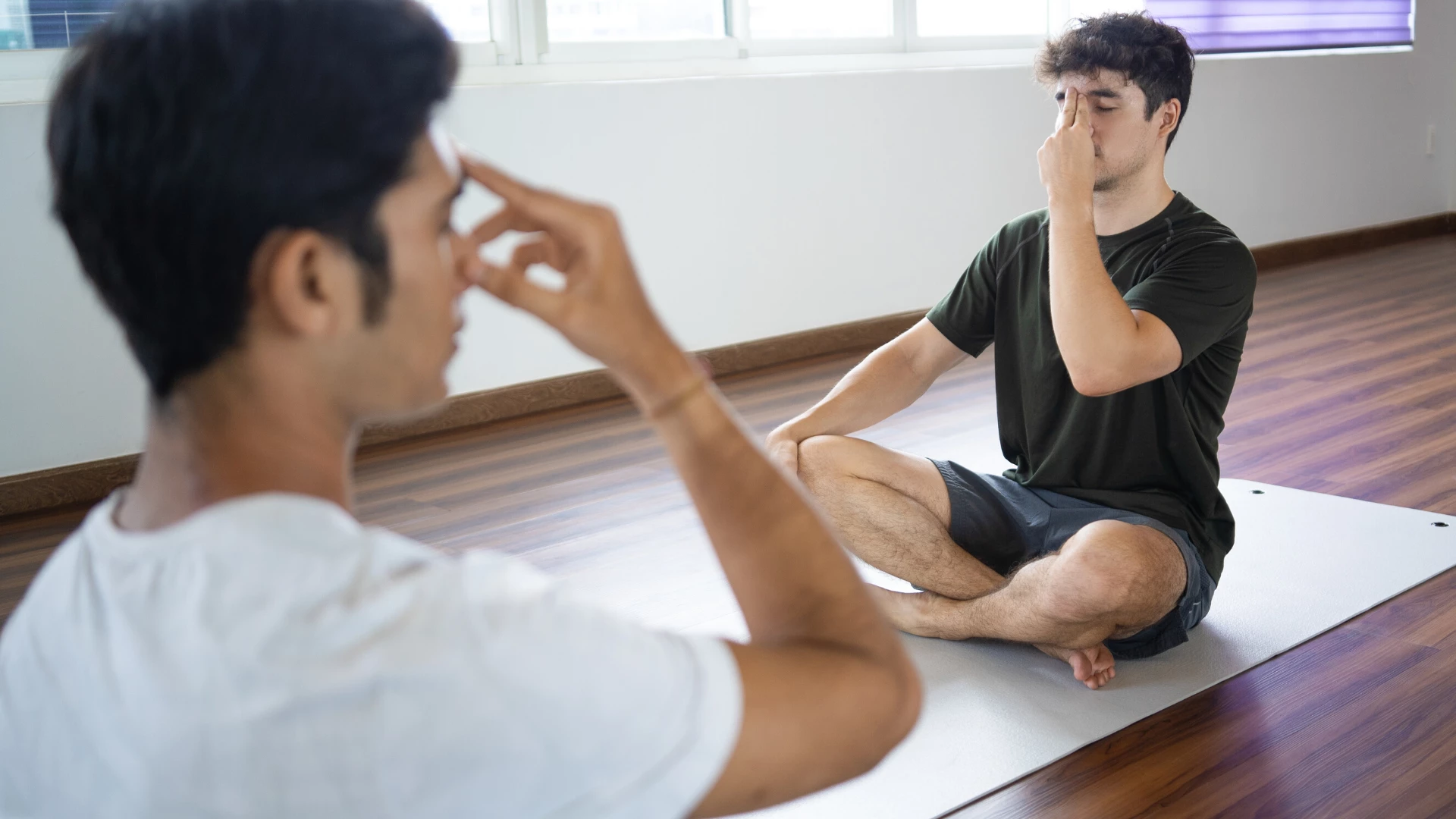
Step 1. Diaphragmatic or Belly Breathing
This approach is honored in the Western medical model we are all familiar with. The idea is to sit or lie down with your hands on your lower belly and breathe deeply. As you breathe in, expand your lower belly, then relax as you slowly exhale. This technique tends to switch our nervous system from sympathetic to parasympathetic (rest-and-digest), helping us to relax both mentally and physically, reverse the stress response, and lower heart rate and aid in sleep. Repeat for a few minutes whenever you feel stressed.
Step 2. Extend the Exhalation to Reduce Over-Breathing
Sometimes diaphragmatic breathing can lead to over-breathing, where we breathe too quickly without fully relaxing, or breathing in our chest. As our typical habit is to breathe in more than we breathe out, it is important to extend the length of our exhalations. Making our exhalations longer than the inhalations offers a way to deeply calm the nervous system. It helps to tone the diaphragm and makes our breathing more efficient.
- Take a natural full breath into your belly then see if you can exhale 25-50 percent longer. For example, inhale for 4 counts and exhale for 6 counts. Remember not to push the breath by trying too hard to exhale.
- Keep the exhalation some amount longer than your inhalation so as not to create stress. Your capacity to exhale will increase as you practice.
- Continue for 5 minutes and observe the calming effect.
Benefits may include reduced anxiety, fatigue, brain fog, dizziness, muscle pain, and digestive problems. Stop if you experience any negative effects, and consult with a yoga therapist or medical professional.
Step 3. Pausing the Breath on the Inhalation
Once our breath has become longer and more regular, pausing the breath at the fullness of our inhalation stops the flow of mind, also known in yoga as the “fluctuations of consciousness.” In the pause feel the breath expand inside the container of your chest, and as it expands, allow it to take with it any tensions or attachments that are disturbing your peace.
According to B.K.S.Iyengar, inhalation retention organizes and distributes the life force to nourish the nervous system and help us develop tolerance, persistence, and perseverance.
Repeat several times in any one practice session, but not in a row. Be sure to place several relaxing breaths in between.
Step 4. Cooling Breath
This pranayama, called sitali, is one of the two pranayamas indicated in the research on saliva mentioned above. This exercise promotes copious saliva by stimulating the glands in your mouth cavity.
- Roll your tongue into a “U” shape if possible. Otherwise, smile and breathe through a small opening in your lips.
- Inhale through your mouth and exhale through your nose.
- Repeat for 5 to 10 minutes.
Set aside 10 to 15 minutes for your breathing practice, daily if possible. Work up to 20 minutes, add your meditation and note the results. I imagine your meditations will become much more fulfilling.
Following the Masters
While it is helpful to receive guidance from an experienced yoga teacher or yoga therapist, breathing is natural and you really can’t do it wrong. Do listen to your body and practice. As there really is no separation between mind and body, any unsmooth or restricted breathing pattern is a reflection of some aspect of stress held in our mental and emotional bodies. To quote my teacher B.K.S. Iyengar, “Mind can not travel on its own; it travels on the breath.” Therefore when we adjust our breath we also begin to adjust our mind.
Yoga for a Healthy Spine: The #1 Key to Enhance Strength, Improve Posture, and Prevent Osteoporosis.

 Lillah Schwartz, C-IAYT Certified Yoga Therapist, is an Asheville-based yoga teacher, teacher trainer, and author with more than 35 years of experience. A certified yoga therapist, her specialties include her book, Healing Our Backs with Yoga: An Essential Guide to Back Pain Relief, which came out in 2016. Lillah also has three therapeutic yoga DVDs for back pain relief.