Low Lunge Pose: Finding the Release Your Hip Flexors Have Been Waiting For
Most people who sit for long hours already know their hips are tight — they can feel it when they stand up, when they climb stairs, when they wake up in the morning with that familiar stiffness in the front of the pelvis. What's less obvious is why stretching doesn't seem to fully fix it.
You drop into a lunge, you feel a pull in the front of the hip, and yet the tightness keeps coming back. The problem isn't that you're not stretching enough. It's that the way most people set up the pose allows the pelvis to tip forward in a way that actually shortens the very muscle you're trying to lengthen.
The hip flexors — and particularly the psoas, which runs from your lumbar spine down into the top of your femur — don't just need length from one end. They need to be lengthened at both ends simultaneously to release fully. When your pelvis dumps forward in a lunge, tucking into an exaggerated arch at the low back, the psoas stays compressed at its upper attachment even as the lower end stretches. You feel something, but you're not reaching the deeper release the pose is capable of creating. The shift is subtle: a slight drawing-up of the frontal hip points, a gentle tailbone tuck that brings the pelvis into neutral. That small posterior tilt is the difference between stretching sensation and genuine therapeutic release.
The Low Lunge Pose
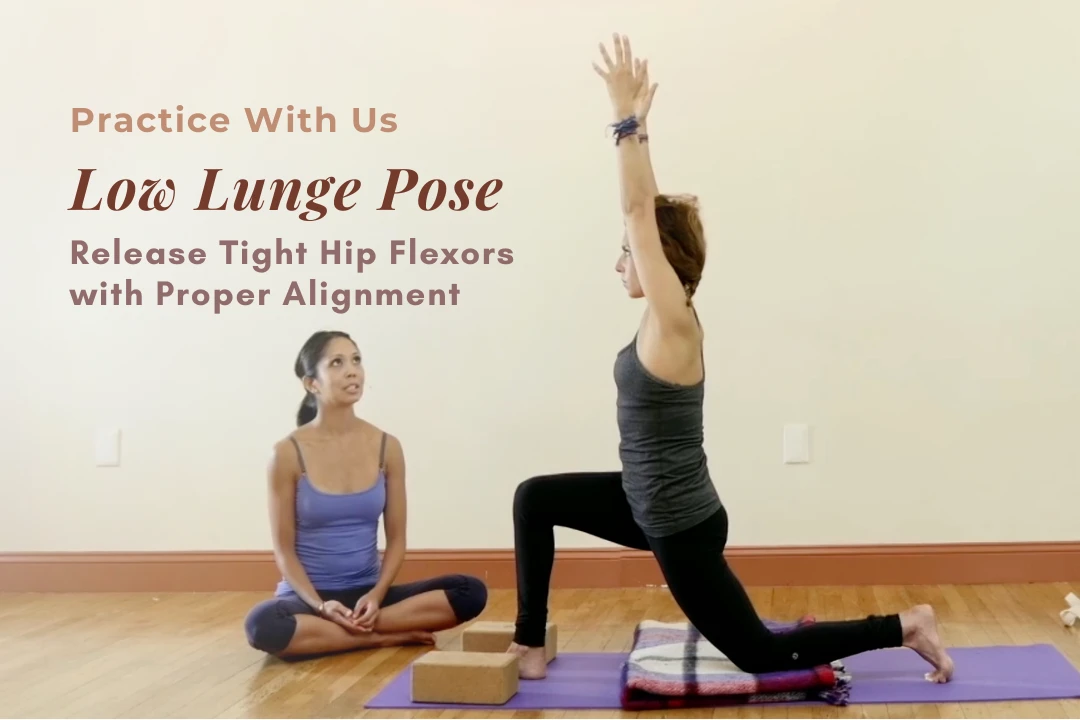
Jasmine Punzalan walks you through exactly this distinction, with the kind of precise cueing that makes a familiar pose feel completely new. She covers the foundational setup — back knee down with enough padding to protect the kneecap, front knee stacked directly over the ankle so the joint isn't bearing load it shouldn't — and then moves into the pelvic action that most practitioners never learn. She also guides you through three hand positions, from floor-supported all the way to arms reaching overhead, so you can find the version that matches where your body is today. And she explains how something as simple as whether your back toes are tucked or flat changes what you feel and why that matters for the stretch you're after.
None of this makes the pose easier. It makes it more honest — targeted at what's actually holding you, rather than a general pulling sensation that fades by morning. Whether you sit at a desk, you run, you cycle, or you're working toward deeper backbends, Low Lunge practiced this way starts addressing the postural pattern at its source rather than just temporarily relieving the symptom.
Watch Jasmine Punzalan guide you through the full tutorial below.
If tight hip flexors are shaping the way you stand, walk, and move through your day, Jasmine's channel offers the precise, anatomy-informed teaching that helps you understand what's happening in your body, and how to change it. Subscribe so you don't miss what's next.