Discovering the Living Body: A Yoga Teacher’s Revolutionary Insight on Fascia
What if everything you thought you knew about your body was too static?
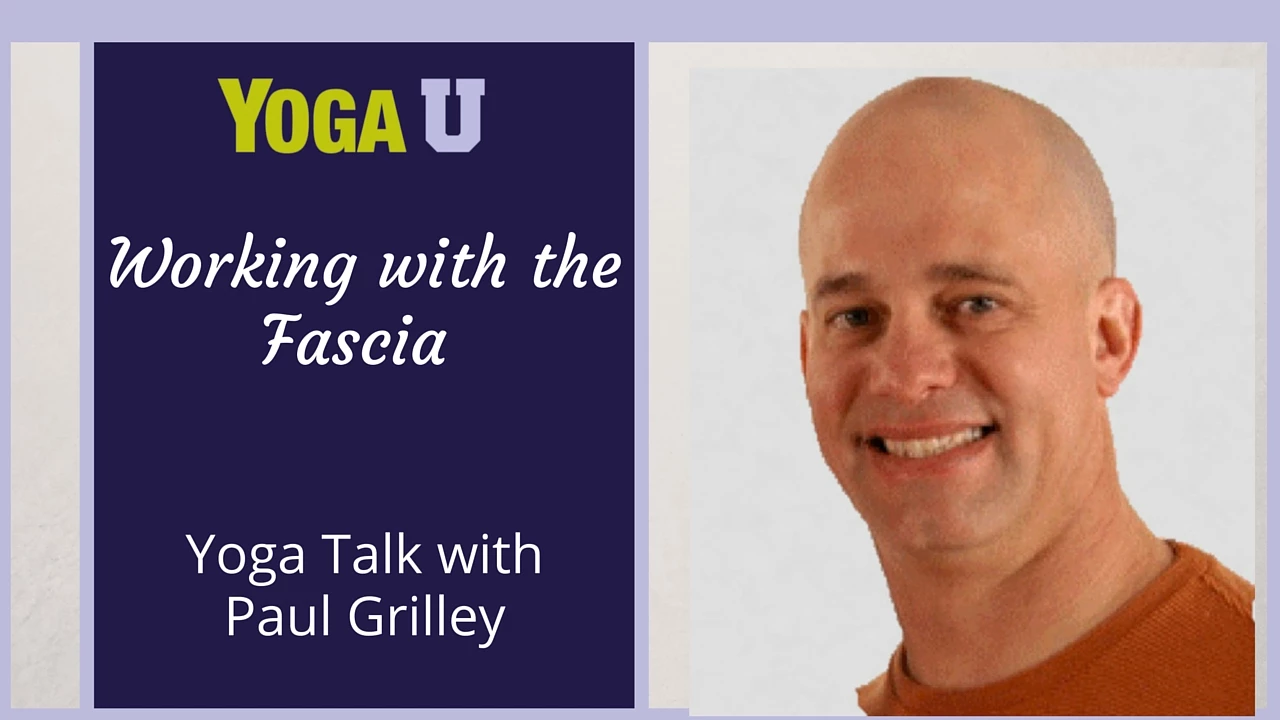
In a thought-provoking conversation, renowned yoga teacher Paul Grilley challenges one of yoga's most persistent misconceptions: that certain styles of yoga are uniquely suited to working with fascia and the body's energetic meridians. His perspective might surprise you.
Beyond the Yoga Wars
“All forms of yoga address the fascia of the body,” Grilley emphasizes in this video interview, pushing back against the tribal thinking that often divides the yoga community. Whether you practice vigorous Vinyasa flow or meditative Yin, your fascia—the connective tissue web throughout your body—is being affected. The meridians are engaged. The benefits are real.
So why does Grilley, a pioneer of Yin Yoga in the West, continue to champion this slower, gentler practice? The answer lies not in superior physical effects, but in something far more profound: awareness.
The Gift of Time and Introspection
Yin Yoga's real power, Grilley reveals, is its invitation to feel. By holding poses for longer periods, using props, and moving slowly, students gain precious time to observe what's actually happening inside their bodies. They can feel the compression in their bones, the stretch in their thighs, the gradual change in tissue tension—experiences that might be equally present in other practices but harder to notice amid constant movement.
“You can feel the change,” he explains. “And I think that leads to a habit of introspection.”
This shift from external validation to internal sensing transforms yoga from a performance into a practice of discovery. Students learn to ask not “Am I doing this right?” but “What am I feeling right now?”
The Body That Changes
Perhaps most revolutionary is Grilley's challenge to our static self-concept. We think we know our bodies—our height, our flexibility, our strength—but these qualities fluctuate throughout the day, the week, our lives.
“The body is not the static lump of clay below my neck,” he insists. When students feel their tissue change in just 60 seconds of mindful practice, when they experience their body as something fluid and responsive rather than fixed, something fundamental shifts.
This awareness doesn't stop at the yoga mat. Once you develop the habit of feeling physical changes, it becomes natural to notice how stress affects your shoulders, how anger lives in your jaw, how your emotions take up residence in your body.
Grilley references the work of Bo Forbes, who introduced the psychological concept of interoception—the ability to sense what's happening inside your body—to the yoga world. It's a skill many of us have lost, but one that yoga, particularly in its slower forms, can help us reclaim.
An Invitation to Feel
For advanced practitioners and beginners alike, Grilley's message is clear: yoga isn't about achieving the perfect pose or following rigid rules. It's about cultivating a rich, living relationship with the body you inhabit.
“Don't look to the outside for what's correct or right or proper or good,” he advises. “What is it doing to you?”
Want to explore these ideas further? Watch the full video interview to discover how this shift in perspective might transform not just your yoga practice, but your entire relationship with your body and yourself.
For more information on the fascia, also take a look at our interview with fascia expert, Robert Schleip.

Also, read...
Struggle with Tight Hamstrings? Take This 60 Second Hamstring Test to See How You Stack Up
No Muscle Is an Island – Are You Making This Common Strength Training Mistake?
Dr. Ray Long: Stabilizing the Shoulders in Downward Dog and Upward Hands Poses
Related courses
Join Our Age Strong Community – More Courses Coming Soon!
How Not to Be Present: Understanding the Power of Mind and Consciousness
Yoga for Flexibility: Fascia, Flow, and Metabolic Efficiency

Eva Norlyk Smith, Ph.D., C-IAYT, is the founder and President of YogaUOnline. She is a lead trainer in YogaUOnline’s Yoga Wellness Educator program, an RYT-300 Yoga Alliance-approved training that focuses on giving teachers the skills they need to offer wellness courses and work with older beginners.
Eva is a trained yoga therapist at the 1,000-hour level as well as a trained bodyworker at the 500-hour level. She is the co-author of several books, including Light Years Younger with Dr. David J. Goldberg.