The Weight Distribution Secret Inside Downward Facing Dog Pose That Protects Your Wrists
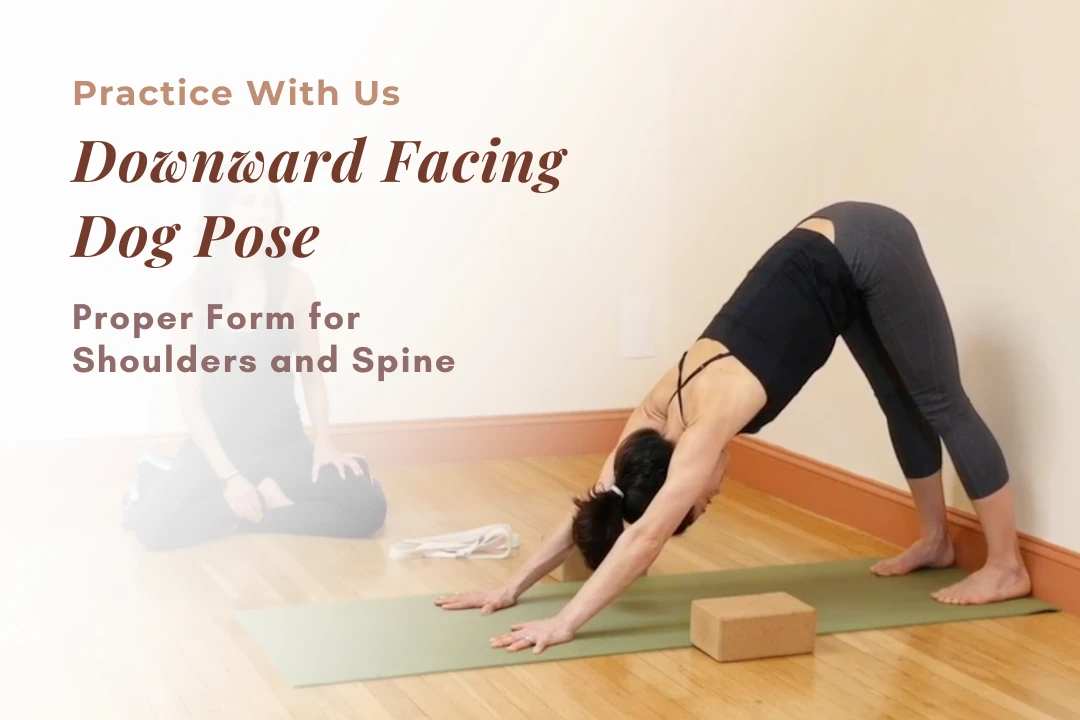
Downward Facing Dog Pose (Adho Mukha Svanasana) shows up in nearly every yoga class. It's often called a rest pose. Yet if it actually felt restful, teachers wouldn't need to keep offering modifications for wrist pain, tight hamstrings, and shoulders that seem to sink toward the ears. The truth is that downward facing dog pose is one of yoga's most complex positions — and when the weight isn't distributed correctly, the body finds ways to compensate that make it feel harder than it should.
Downward Facing Dog Pose: Where the Weight Actually Belongs
Most wrist discomfort in this pose comes from the same source: too much weight pooling into the heel of the hand. The palm presses down as a unit, the wrist joint takes the load, and over time that creates strain.
Jasmine Punzalan addresses this with a specific hand placement that redistributes the work. Fingers spread wide. The base of the thumb and the base of the index finger root actively into the mat. That rooting action transfers weight forward across the hand, away from the wrist joint and into the fingers and knuckles — where it belongs. The wrist creases run parallel to the front edge of the mat. This small adjustment changes everything about how the pose feels over time.
What Jasmine Covers: Hands, Shoulders, Spine, and Legs
The tutorial breaks down Adho Mukha Svanasana with the kind of layered attention this pose actually requires. After hand placement, Jasmine moves to the shoulder action: externally rotating the upper arms while pressing the floor away. This creates space for the neck rather than compression. Without it, the shoulders creep toward the ears and the neck shortens under load.
From there, the focus moves to the spine. Reaching the sitting bones toward the ceiling matters more than straight legs. When hamstrings are tight and you force the legs straight, the lower back rounds to compensate. Bending the knees preserves the length of the spine — and a long spine in a rounded pose is always the better trade.
Jasmine also covers modifications: blocks under the hands for wrist sensitivity, and bent knees as a permanent option rather than a beginner concession.
The Pose Worth Taking Seriously
Downward facing dog pose rewards precision. When the hand, shoulder, and spine actions come together, it stops being something to endure between the poses that “count.” It becomes a full-body strengthener, a spinal decompressor, and yes — eventually — something that feels genuinely restorative. That shift doesn't happen by doing it more. It happens by doing it right.
Watch Jasmine Punzalan guide you through the full tutorial below.
Subscribe to the YogaUOnline YouTube channel for more tutorials that reveal what's actually happening in the poses you do every day — and how small adjustments produce lasting change.