Full Wheel Pose: The Intermediate Step Most People Skip That Makes Everything Safer
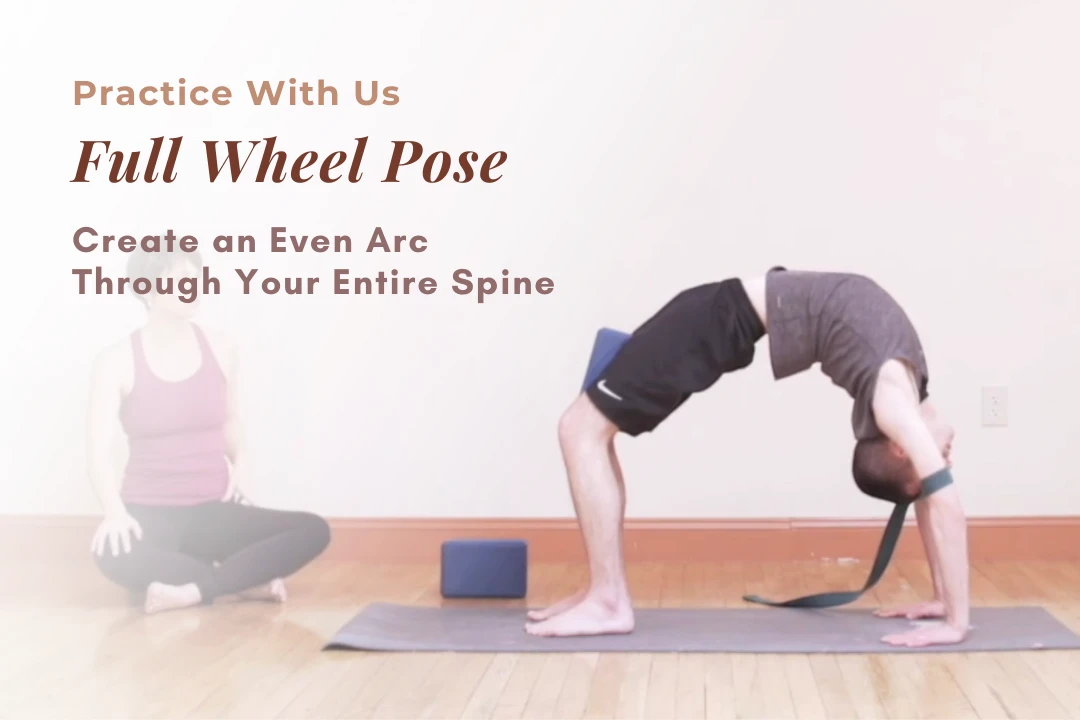
Full Wheel Pose (Urdhva Dhanurasana) is one of yoga's deepest backbends. It asks for openness through your shoulders, your hip flexors, and the entire front of your body. Most practitioners who struggle with it aren't lacking flexibility. They load the pose incorrectly — and the lower back feels it first. When the legs stay passive and the upper body does all the work, the lumbar spine bends more than it should.
Full Wheel Pose and the Leg Activation Most Practitioners Miss
Your lower back is already the most mobile part of your spine. In full wheel pose, passive legs make that mobility the path of least resistance. All the backbending happens in the one place that needs it least.
Karen Fuhrman starts with the legs. Before the arms press and before the back arches, the feet have a job. They press actively into the floor. That action engages the legs, lifts the hips, and moves the backbend upward — into the thoracic spine. This is where mobility is usually limited. It's also where opening produces the most benefit.
Feet stay parallel. Toes point forward rather than turning out. The inner thighs draw toward each other to keep the knees from splaying. These aren't cues to layer on top of the pose. They're the foundation the pose is built on.
What Karen Covers: Setup, the Crown Checkpoint, and Modifications
The tutorial starts with hand and foot placement. From there, Karen teaches the step most practitioners skip: lifting onto the crown of the head before pressing all the way up.
This checkpoint matters. It shows whether your shoulders are ready to press fully. It also reveals whether your leg drive is working — the hips should lift actively, not wait for the arms. If the hips stay low at the crown position, the legs aren't yet doing their job.
For those still building shoulder openness and hip flexor length, Karen offers modifications. Each one keeps the correct muscle engagement in place while reducing the overall demand. The architecture stays the same even in a simpler version.
A Backbend That Works Because the Whole Body Works
Full wheel pose is sometimes treated as a milestone. Either you can do it or you can't. Karen reframes it as a coordination problem. When your legs drive, your pelvis lifts, your thoracic spine opens, and your arms press — the pose spreads its demand across your entire body. That's when it stops feeling like strain. That's when it becomes the deep, energizing backbend it's meant to be.
Watch Karen Fuhrman guide you through the full tutorial below.
Subscribe to the YogaUOnline YouTube channel for more tutorials that teach the mechanics behind yoga's most demanding poses — so you can practice them with confidence, not just courage.