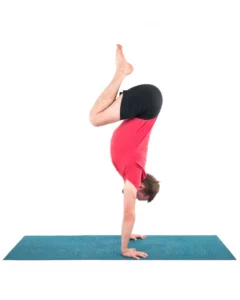

Do you wake up in the morning feeling like the Tin Man in the Wizard of Oz?
You know the feeling. That first moment your feet hit the floor — and everything just feels… wrong. Stiff joints. Achy muscles. And those first ten or twenty steps shuffling along like you’ve aged twenty years overnight . . .
And then, slowly, the stiffness fades. By the time you’ve had your coffee, you almost feel normal again.
So you chalk it up to “just getting older.” You stretch a bit. Maybe take an ibuprofen. And you move on — until tomorrow morning, when it starts all over again.
Here’s the thing, though. What if that morning stiffness wasn’t just aging? What if it was a signal — a message from your body pointing to something specific that’s going downhill, and that you actually have the power to change?
That’s exactly what the latest research is telling us. And the answer is pointing to a part of the body most of us have never even heard about.
It’s not your muscles. It’s your fascia.
What Is Fascia — and Why Is It The Most Important Part of the Body That You’ve Likely Never Heard Of?
Most people have never heard of fascia. For centuries, it was the white translucent tissue wrapping around muscles and organs that surgeons pushed aside to get to the “real” anatomy. Until just a few decades ago, medical researchers dismissed it as boring packing material, not worth a second look.
They were very, very wrong.
Here’s the best way to picture it. Imagine a full-body wetsuit, made of living tissue, that wraps around every single muscle, bone, joint, nerve, and organ in your body — from the top of your head to the tips of your toes, without a single break or gap. It connects everything. It’s all one continuous web.
That’s fascia.
And as it turns out, this “ignored” tissue may be one of the most important factors in how freely you move, how healthy your joints stay, and even how well you age.
Dr. Robert Schleip, one of the world’s leading fascia researchers and director of the Fascia Research Project at Ulm University in Germany puts it, aging-related stiffness is primarily caused by changes in the body-wide connective tissue network of the fascia rather than just muscular shortening.

Tug on any part of the fascial web — and the whole network responds. This is why a tight hip can cause knee pain, and why chronic stress can show up as stiffness in your lower back.
Flexibility May Be Your Most Underrated Aging Superpower
So, why should we pay attention to these early changes?
Most of us think of flexibility as a nice-to-have. Something gymnasts and yogis have. Maybe something that makes it easier to tie your shoes or reach the top shelf.
But in fact, preserving flexibility is essential to preserve your long-term mobility. Without adequate flexibility, joints cannot move through their full range of motion with control and you begin to lose the freedom of movement you have taken for granted all your life.
And, here’s a finding that may surprise you: flexibility may actually be a powerful predictor of how long and how well you live.
Researchers in Brazil tracked more than 3,000 people between the ages of 46 and 65 for nearly 13 years. They measured how flexibly each person moved across seven joints, and gave everyone a score. Then they waited — and checked back to see what had happened.
The results were remarkable. People who scored higher on flexibility were far more likely to still be alive at the end of the study. The flexibility scores of survivors were nearly 10 percent higher than those who had died.
Among men with low flexibility scores, the risk of death during the study period was nearly twice as high. For women — and this is the number that really makes you sit up — it was nearly five times higher.
As Harvard Health summed it up: “Greater flexibility is linked with longer lives.”
Why would flexibility be so powerfully linked to survival? The research points to several plausible mechanisms. People with greater flexibility tend to be more physically active, maintain higher functional independence, and have fewer falls and injuries.
But there’s a deeper biological dimension too, and this is where the fascia story gets really interesting.
A 2024 review published in Frontiers in Neurology described fascia as far more than a structural wrapping — characterizing it as a “regulatory system” richly embedded with blood vessels, lymphatic vessels, and neurotransmitter receptors, and suggesting it may act as a whole-body “watchman” that both receives and processes information about overall health.
Because every lymphatic vessel in the body runs through fascial tissue, fascial restriction has a direct mechanical effect on lymphatic drainage — the system responsible for clearing metabolic waste and supporting immune function. Reduced fascial mobility has also been linked to impaired microcirculation — the tiny capillary networks that deliver oxygen and nutrients to every cell.
None of this is to say that flexibility is a magic shield against disease. The relationship is more subtle than that. What the evidence does suggest is that flexibility — particularly the kind that reflects well-hydrated, mobile fascial tissue — is a meaningful marker of biological age and systemic health. Lose it, and you lose more than range of motion. You lose some of the conditions your body depends on to function well.
Fascia: Your Body’s Overlooked Regulatory System
When you look at the structure of fascia and how it wraps around every muscle fiber, muscle, tendon, and ligament, it stands to reason that a supple, well-hydrated fascia will be vital for retaining flexibility and mobility.
But the many roles of fascia go way beyond that.
We’re all familiar with the body’s great regulatory networks: The immune system, the cardiovascular system, the endocrine system, and so on. These are the systems that monitor what’s happening inside the body and make constant adjustments to keep everything in balance.
But here’s what researchers are now learning: Fascia is likely one of the body’s most important, yet overlooked vital regulatory systems.
For most of medical history, fascia was treated as inert packing material — the white, filmy stuff surgeons pushed aside to get to the “real” anatomy underneath. It was so unremarkable, so apparently purposeless, that anatomy students were told not to bother studying it carefully. It was just wrapping.
That view is now being turned completely on its head.
The 2024-review in Frontiers in Neurology referenced above describes fascia not as passive structural tissue, but as a regulatory system — one that actively monitors and responds to conditions throughout the body, and sends signals that influence everything from pain and inflammation to immune function and stress response.
The authors describe it as a whole-body “watchman” — continuously gathering information and communicating it to the systems that need to respond.
How does it do this? Your fascial network is one of the richest sensory tissues in the body with an extraordinary density of nerve receptors — all of them sending and receiving signals in real time. And, it is threaded with blood vessels and lymphatic channels. When your fascia is healthy and mobile, these channels stay open and communicating freely. When the fascia becomes stiff, densified, or chronically restricted — as it does with age, inactivity, injury, or chronic stress — those communication channels get compromised. The signals get noisy. The regulatory loop breaks down.
Here’s what that looks like in practice.
When fascia becomes restricted, it doesn’t just limit your movement. It can compress the lymphatic vessels running through it, impairing your body’s ability to clear metabolic waste and mount an immune response.
It also activates the nerve receptors wired to your autonomic nervous system — the system that controls whether you’re in a state of stress and alertness, or rest and recovery — and keeps them in a low-grade state of alarm, even when there’s nothing threatening happening.
Dr. Robert Schleip’s research has shown that this fascial-autonomic feedback loop is real and measurable: chronically stiff fascia literally keeps the body’s stress system switched on. Think about what happens when you’re under chronic stress — muscles tighten, breathing gets shallow, the jaw clenches. But underneath all that, your fascia is tightening too. And once it does, it sends signals right back to your nervous system that reinforce the stress response. The body and the brain get locked in a loop, each reinforcing the other.
Most of us don’t realize that when we feel chronically tense, depleted, or “wound up” — it may not just be in our heads. It may be in our fascia.
Did you know that this is also why a good yoga class can genuinely change your mood — not just your flexibility? Practices that restore fascial mobility don’t just loosen tight tissue. They actively help your nervous system shift out of stress mode. When you move your fascia well, you send a signal through that whole regulatory network: the body is safe. You can relax now.
The reframe — from “inert wrapping” to “body-wide regulatory system” — is perhaps the most important shift in how we understand the body to emerge from the last two decades of connective tissue research. And it has profound implications for how we think about movement, aging, and long-term health.
The Good News: Fascia Loves to Be Moved
And the Earlier You Start, the Better
The good news is that when it comes to retaining the resilience and suppleness of fascia, there’s a lot you can do to make a difference.
But the earlier you start, the better. The fascial changes that lead to stiffness and the gradual loss of flexibility and mobility don’t happen overnight. They build quietly, over years — often long before you notice anything is wrong.
In one study, researchers used ultrasound imaging to compare the fascia of young adults (average age 22) with older adults (average age 69). What they found was eye-opening: in the lower back, older adults had fascia that was 40 to 76 percent thicker than their younger counterparts. That thicker, denser fascia correlated directly with reduced range of motion and flexibility. The changes had been building silently for decades.
So what’s actually happening inside the fascia as we get older?
The answer comes down to a molecule called hyaluronic acid — a “gel-like” molecule, that is crucial for tissue elasticity, hydration, and plumping – think of it as your body’s natural oil.
In healthy, well-hydrated fascia, this substance keeps the thin layers of connective tissue inside the fascial web slippery and fluid — so they can glide smoothly past one another every time you move. When it’s working well, you are supple and easy in your body. Bending over, reaching, twisting — it all just happens.
But with age — and especially with too much sitting, too much stress, or too little varied movement — this natural lubrication starts to thicken and get sticky. Researchers call this “densification.” The layers of fascia that should glide freely start to stick together. And instead of feeling fluid and easy, you begin to feel that unwelcome feeling of growing stiffness in your body.
The good news is that fascia responds to the right movement – and, it’s never too late to start.
Unlike cartilage, which has limited ability to repair itself once damaged, fascial tissue can remodel, rehydrate, and restore its suppleness with the right kinds of movement. This isn’t wishful thinking. It’s been demonstrated at the cellular level.
Research shows that yoga-like stretching — slow, sustained, multi-directional movement — triggers measurable changes inside fascial tissue. The cells within the fascia respond to gentle mechanical tension by actively rearranging their collagen fibers, breaking down adhesions, and rehydrating the ground substance that keeps the layers slippery. Give your fascia the right input, and it starts to heal itself.
But — and this is important — not all movement does this equally well. Fast, repetitive exercise — the kind most of us grew up thinking of as “working out” — mostly trains the contractile muscle fibers. It may do relatively little for the fascial matrix itself.
What fascia responds to best is:
- Slow, three-dimensional movement — reaching, rotating, and bending in multiple directions, not just the same straight-line patterns repeated over and over
- Sustained holds — gentle stretches held for 90 seconds to several minutes, which give the tissue time to respond and rehydrate
- Whole-body movement patterns — movements that engage fascial continuity across the entire body, rather than isolating individual muscles
- Gentle, rhythmic loading — soft bouncing or swinging movements that stimulate the spring-like properties of fascia and encourage fluid exchange throughout the tissue
Yoga — particularly when it’s practiced with fascia in mind — checks all four of these boxes. The slow transitions, the sustained holds, the spiraling and multi-directional movements, the whole-body integration — these are exactly the conditions fascia needs to stay hydrated, supple, and mechanically healthy.
This isn’t yoga as a flexibility performance. It’s yoga as maintenance for the connective tissue system that underlies all your movement. Think of it as oiling the machine — not once, but consistently, as part of how you live.
You Have More Control Than You Think
Here’s the takeaway that matters most.
Morning stiffness. Tight joints. That slow, shuffling feeling first thing in the day. Most people accept these things as the price of getting older. They are not. They are signals — signals from a connective tissue system that is asking for something different.
The people who move into their sixties, seventies, and eighties with ease and freedom didn’t get lucky. They kept their fascial tissue hydrated and mobile. They moved in varied, multi-directional ways. They gave their bodies what fascia needs — and their bodies responded.
The research is clear. The stiffness you feel is not inevitable. It is not written in stone. It is, to a very meaningful degree, changeable — with the right movement, practiced consistently, starting now.
You don’t have to be the Tin Man. The oil can is closer than you think.