Backbends Tutorial: Building Real Flexibility Without the Low Back Pain
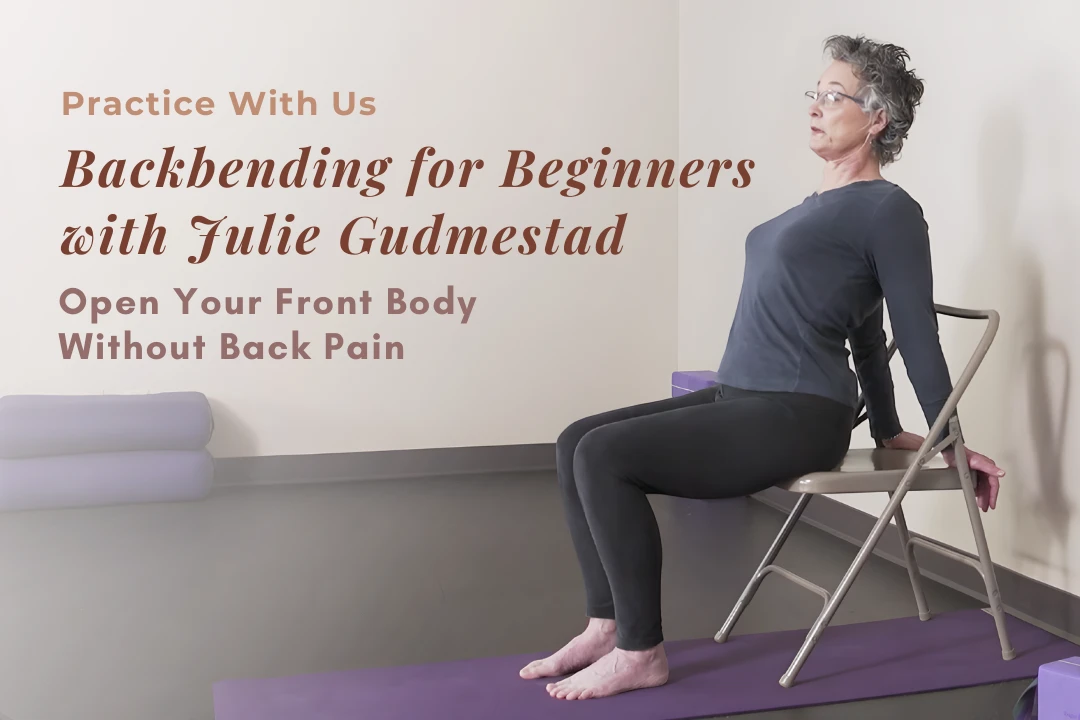
If backbends have ever left you gripping your low back, you're not alone. You're also not broken. Most people who sit for long hours simply aren't set up to bend backward safely yet. Hip flexors shorten from years in a chair. The chest rounds forward around a keyboard. Over time, the mid-back stiffens from all that forward-focused activity. When you try to backbend from that starting point, your spine takes the path of least resistance. That usually means compressing the low back. This isn't a flexibility problem. It's a preparation problem.
A Backbends Tutorial That Starts Where You Actually Are
Understanding where backbending movement comes from changes everything. It doesn't come from the low back. It comes from the front of the hips opening, the chest expanding, and the mid-back extending. The posterior pelvic tilt is the key. When you tip the pelvis correctly before you arch, the low back stays out of the equation. The rest of the spine can finally do its job. That one shift makes the difference between a backbend that builds your body and one that wears it down.
Julie Gudmestad is a physical therapist and experienced yoga teacher. Her anatomical approach addresses the root causes of limitation rather than pushing past them. She begins with a modified Downward Dog and Plank at the chair. This warms the body without loading your wrists. Supported low lunge variations follow, with careful instruction on the pelvic tilt that releases chronically tight hip flexors. Chest-opening work uses a chair, a rolled blanket, a belt, and standing positions. Each exercise targets the mid-back rounding that builds up from years of sitting. The sequence then builds toward Bridge Pose (Setu Bandha Sarvangasana) in stages — from a strengthening half-bridge to a fuller expression supported by a belt for maximum lift.
Using props in this practice isn't a compromise. A chair, a belt, a blanket under your spine — these are how the pose actually works for a body shaped by modern life. They give your muscles the feedback they need to release in the right sequence. The low back stops bracing. The front body opens. That's not easier backbending. That's smarter backbending.
Watch Julie Gudmestad guide you through the full tutorial below.
If this kind of anatomically informed, step-by-step approach to yoga is what your body has been waiting for, subscribe to the YouTube channel — there's an entire library of practices built around the same principle: understanding your body well enough to work with it, not against it.