Legs Up the Wall (Viparita Karani): Gentle Inversion for Nervous System Calm
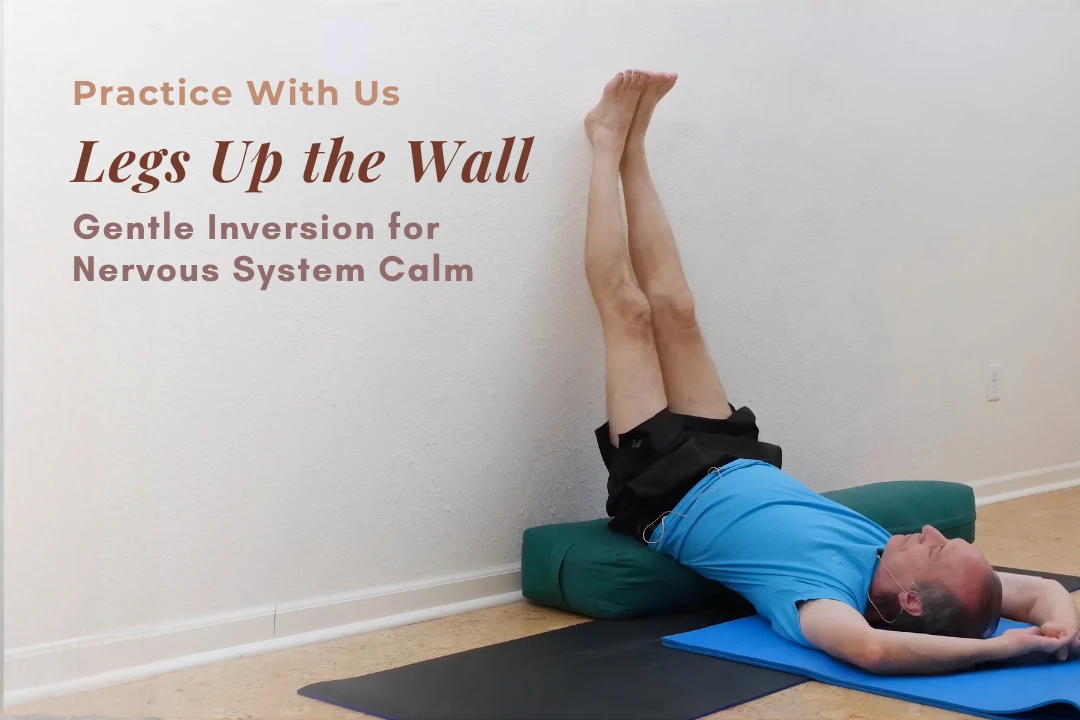
Legs Up the Wall (Viparita Karani): Gentle Inversion for Nervous System Calm
Most people think Legs Up the Wall is just lying on the floor with your legs propped against the wall. Technically, that's true. But there's a version of this pose that actually works — where your nervous system lets go and fifteen minutes feels like a full reset. Then there's the version most people end up in: slightly off-center, one hip hiked, shoulders tense, wondering why this is supposed to be restorative.
Legs Up the Wall Tutorial: The Setup That Changes Everything
Legs Up the Wall (Viparita Karani) is one of yoga's most healing inversions. The setup, though, is where most people go wrong. The common instinct is to lie down first, then scoot your hips toward the wall while your legs are already in the air. What Terry Smith shows you instead is far simpler: sit sideways with one hip touching the wall. Then swing your legs up as you lower your back to the floor. That one shift makes the difference between landing in the pose and wrestling your way into it.
Where your sitting bones land relative to the wall matters — and it isn't one-size-fits-all. Tighter hamstrings call for a small gap between your hips and the wall. That space lets the pose feel open rather than strained. More flexibility means you can move closer, letting the legs rest fully supported. Terry walks you through how to read your own body and find the right distance.
Why Props Make This Pose Work
Adding a bolster or folded blanket under your hips can change the whole experience. The gentle lift creates a soft backbend through the chest. It opens the front of the body and deepens the rest response the pose is known for. Your arms rest wide, palms facing up — not as an afterthought. That position signals to your nervous system that there is nothing left to do.
The effects of this inversion are real. Reversing the relationship between your legs and your heart helps blood move back from the extremities toward the core. For anyone who spends hours on their feet or sits through long travel days, the result is immediate: swelling reduces, fatigue clears, the body begins to settle. Terry recommends holding the pose for five to fifteen minutes. That's how long the nervous system needs to fully shift into rest.
This is not a pose you do when you have nothing else to practice. It is a practice in its own right — one that asks very little and returns a great deal.
Watch Terry Smith guide you through the full tutorial below.
If restoring your energy through stillness resonates with you, subscribe to our YouTube channel for more restorative practices that use gravity, breath, and intelligent setup to help you recover deeply.