Why Your Hamstrings Stay Tight No Matter How Much You Stretch
Tight hamstrings are one of the most common physical complaints in the world — and one of the most persistently mishandled. The standard response is to reach for your toes, feel the pull, and hold. But that pull often signals strain rather than productive lengthening, and it rarely produces lasting change. Yoga for beginners hamstring work offers a different approach: using breath, support, and careful positioning to create release rather than resistance. Your hamstrings don't need to be forced. They need the right conditions to let go.
Yoga for Beginners Hamstring Work That Creates Lasting Change
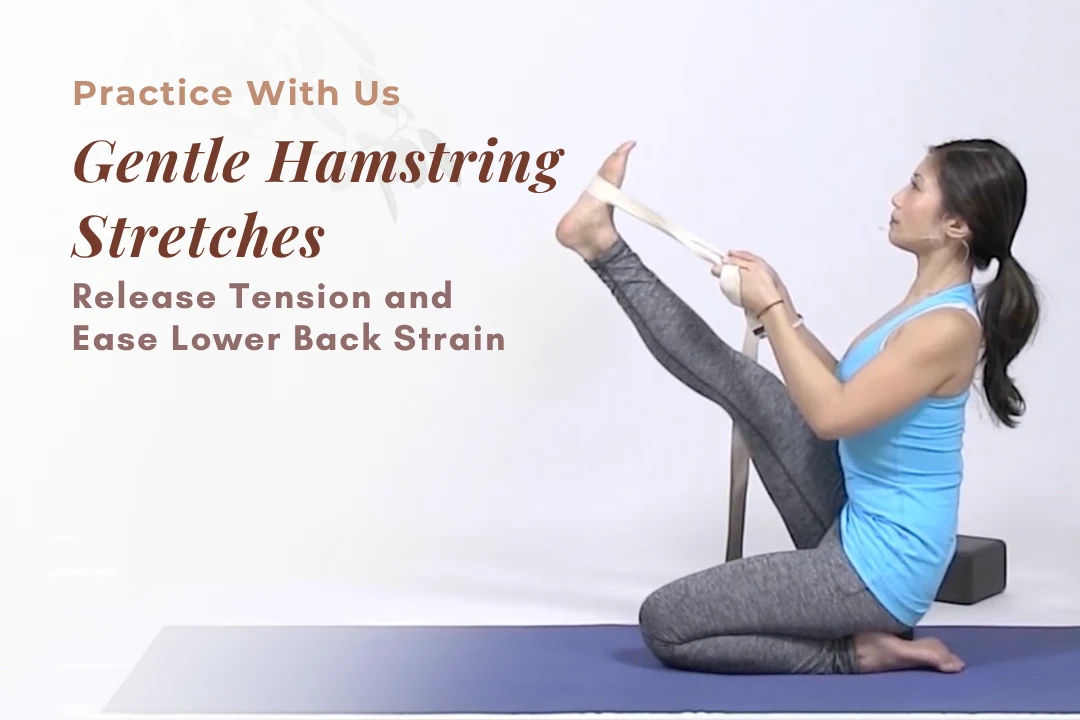
A yoga strap — or a belt, or a towel — changes the entire equation. In this practice, Claudine Beeson guides you through a supine hamstring sequence that uses the strap to bridge the distance between your hands and feet. This matters because it allows you to work at your actual edge, not a compensated version of it. Without a strap, many practitioners round the lower back or grip the leg with tension just to reach. With the strap, the leg straightens fully, the back stays long, and the nervous system receives the signal that this is safe. That signal is what allows the muscle to release.
A Sequence Built Layer by Layer
Claudine layers in side and cross-body variations to address the IT band and outer hip. She then adds point-and-flex exercises with ankle circles to warm the full leg, followed by low lunge and half splits that target the hamstrings from multiple angles. Yoga blocks are available for additional support but are not required. The practice begins lying down for a reason — starting on your back removes the effort of balancing and reduces demand on the lower back. As a result, breath awareness establishes naturally before movement begins.
Claudine builds the sequence progressively, so each shape prepares the tissue for the next. By the time you arrive at Downward Facing Dog near the close, the hamstrings have been addressed from enough angles that the full-body stretch integrates everything that came before.
Why Effort Is the Wrong Tool for Tight Hamstrings
More effort does not produce more release. Hamstrings that feel chronically tight are often hamstrings that pull repeatedly without support. Working with a strap, maintaining a long spine, and staying within a sustainable range teaches the body that stretching is safe. Over time, that safety creates genuine, lasting change — not how far you reach on any given day.
Watch Claudine Beeson guide you through the full tutorial below.
If tight hamstrings have been limiting your movement and your practice, this channel has more of what you need. Subscribe to YogaUOnline for therapeutic yoga practices that build real flexibility through alignment, breath, and patience.