King Dancer Pose: What You’re Missing When the Pose Won’t Hold
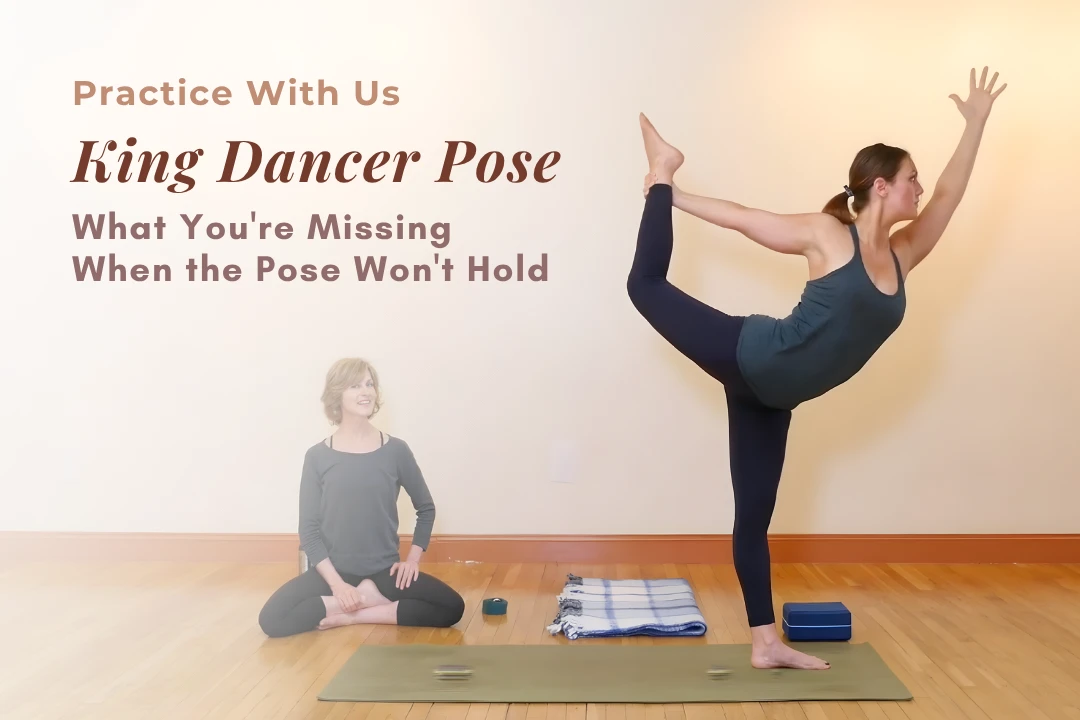
King Dancer Pose (Natarajasana) is one of yoga's most beautiful shapes — a standing backbend that opens the shoulders, hip flexors, and heart simultaneously, balanced on a single leg. It's also one of the most misunderstood. Most practitioners approach it by kicking back hard, grabbing whatever they can reach, and hoping balance holds. The result is a pose that wobbles, strains, and rarely feels like what it looks like in pictures. The problem isn't flexibility or balance ability. It's that the actions creating the pose have never been clearly taught.
King Dancer Pose Stability Starts With How You Stand
Before the back leg lifts at all, the quality of your standing leg determines everything. In this tutorial, Natasha Rizopoulos begins there — rooting down through the foot, engaging the glute for pelvic stability, and finding a steady gaze before anything else moves. This foundation is what makes the rest of the pose possible. From that grounded base, she teaches you to reach back methodically, holding the inner ankle rather than the outer foot. That grip placement matters: it keeps the lifted hip from winging open and preserves the alignment that makes the backbend safe. The tutorial then addresses the counterbalance — as your back leg lifts, your torso tips forward and your front arm extends, creating the diagonal line that distributes the pose's demands evenly. You'll also work with a strap around the foot and, optionally, a wall for balance support.
The principle Natasha introduces that changes everything is mutual resistance. Instead of pulling the foot toward the body, you press the foot into the hand while the hand resists. That pressing action is what creates the backbend. It travels through your entire spine rather than collapsing into the lower back the way a passive kick does. Your body opens because it's working — not because it's been forced.
King Dancer Pose stops being a struggle the moment you stop treating it as a flexibility test. It's a coordination challenge. Balance and backbend are not happening separately — they're creating each other. The front arm reaching forward and the back foot pressing into the hand are two ends of the same action. When that relationship clicks, the pose steadies. You're not holding on. You're in conversation with your own body, and the shape emerges from that exchange.
Watch Natasha Rizopoulos guide you through the full tutorial below.
Natasha's teaching consistently uncovers the engagements hiding inside familiar poses. Subscribe to YogaUOnline for more standing balance tutorials that trade wobbling for genuine, rooted steadiness.