It’s Not a Quad Stretch — Here’s What Camel Pose Is Actually For
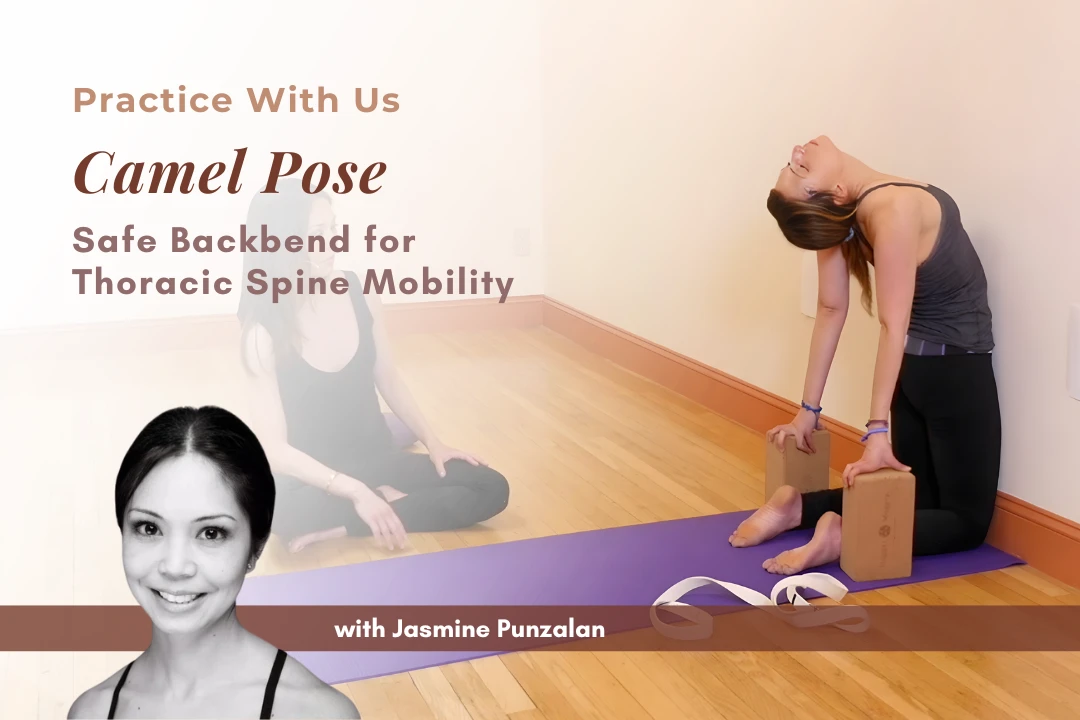
Camel Pose (Ustrasana) has a reputation for being intense — a deep backbend that asks a lot of your spine, your shoulders, and your willingness to lean into discomfort. But for many practitioners, the experience of Camel Pose feels less like an opening and more like a compression. The lower back tightens. Your quads burn. Somewhere in the middle of it, you start to wonder if you're doing something wrong — or if this pose is simply not for you.
What Camel Pose Is Actually Doing to Your Body
Here's what changes everything: where your hips are. When your hips drift away from the wall, Camel Pose becomes a quad stretch. That's it. You're not mobilizing your thoracic spine. You're not opening your shoulders. Instead, you're pulling on the front of your thighs and asking your lower back to absorb the load. But when your hips stay in contact with the wall — genuinely pressed there — the entire biomechanics of the pose shift. Your hip flexors begin to strengthen rather than simply lengthen. Your thoracic spine gets the extension it's actually capable of. That's when the backbend becomes real.
What Jasmine Covers in This Tutorial
Jasmine Punzalan walks you through a wall-supported approach to Camel Pose (Ustrasana) that makes this shift immediate and tangible. She begins with block placement — two blocks outside your ankles, and an optional third between your feet to keep them from splaying outward. Before you attempt the backbend, she teaches a shoulder action most practitioners skip: drawing the elbows toward the midline to externally rotate the upper arms and spread the collarbones wide. This single step changes how the pose feels across your chest and shoulders. From there, Jasmine guides you through three progression levels, so you can find the version that matches where your body actually is today. She also covers how to exit safely — in one fluid movement rather than one side at a time — which protects the SI joints from unnecessary torque.
The Wall Isn't a Crutch — It's the Whole Point
Using the wall in Camel Pose isn't a modification for people who can't manage the full version. It's the mechanism that makes the full version work. Without that hip contact, you're doing a different pose — one that taxes your quads and lower back far more than your thoracic spine. With it, you're creating the conditions for genuine spinal mobility, shoulder opening, and the front-body length this pose is designed to build. The wall gives you immediate feedback. Your body knows right away whether the contact is there. That means you can learn in a single session what might otherwise take years to feel.
Watch Jasmine Punzalan guide you through the full tutorial below.
If understanding the why behind a pose changes how the pose feels in your body, Jasmine's channel is worth following. Subscribe to YogaUOnline on YouTube for tutorials that explain the mechanics so the movement actually makes sense.

Also, read...
Breathe Easy: A Yoga Sequence to Exercise Your Diaphragm
Strong Muscles, Strong Bones — PLUS, a Younger Brain?
How Well Are You Aging? An Easy Test for Health and Longevity
Related courses
Join Our Age Strong Community – More Courses Coming Soon!
How Not to Be Present: Understanding the Power of Mind and Consciousness
Yoga for Flexibility: Fascia, Flow, and Metabolic Efficiency