Cobra Pose (Bhujangasana): What Your Back Muscles Need to Do
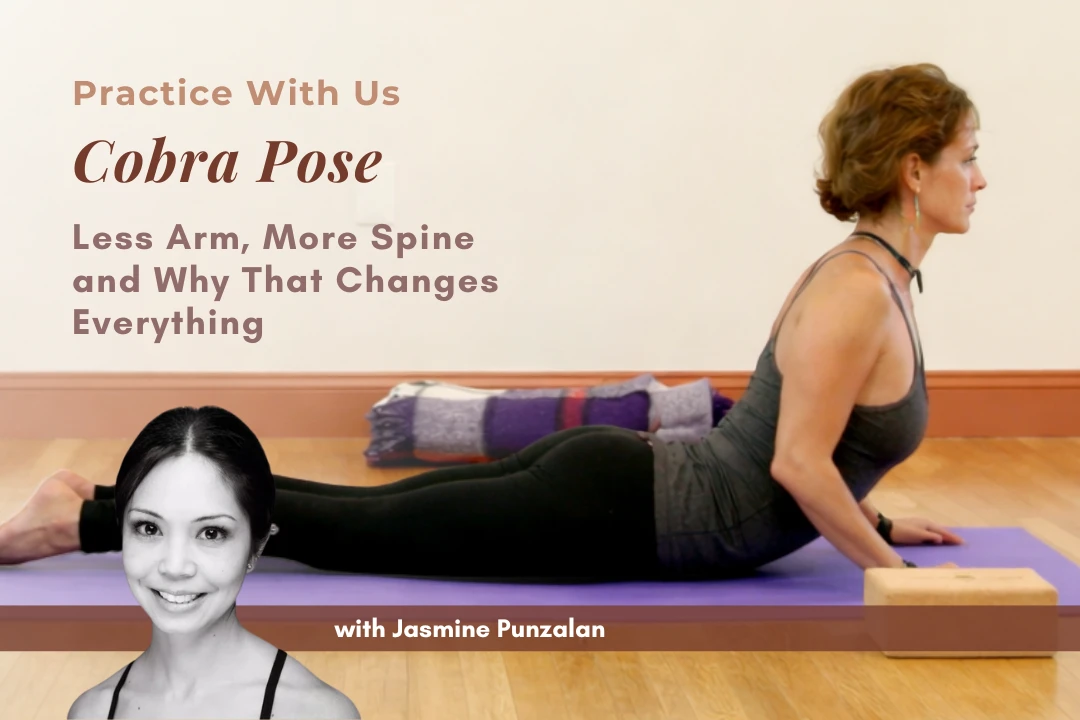
Cobra Pose looks simple. You lie on your stomach, press up, and arch your spine. Most practitioners have done it hundreds of times. But here's what often goes unexamined: if your arms are doing the lifting, your back muscles are largely along for the ride. Cobra pose practiced that way still feels like a backbend. It just isn't building the spinal strength it's capable of — and for anyone who wants better posture, a more resilient lower back, or a safer path into deeper backbends, that distinction matters enormously.
What Cobra Pose (Bhujangasana) Is Actually Asking Your Back to Do
The arms are supposed to be a guide, not a crane. When you push strongly into your hands to rise up, your back muscles don't need to recruit fully — the arms handle the load. Over time, this pattern feels normal. Your spine extends, the shape looks right, but the muscles that should be strengthening quietly stay underemployed. One small test exposes this immediately: lift your hands an inch off the floor. If the pose collapses, your back wasn't doing the work. If you can hold the shape without them, you've found what Cobra Pose is actually asking for.
How Jasmine Punzalan Builds the Pose From the Foundation Up
Jasmine starts on the ground — literally. Elbows bent, positioned directly over the wrists, forearms creating a stable base. Before any lifting happens, the legs get organized. Reaching straight back through your big toes while pressing the tops of your feet into the mat brings a buoyant quality to your inner thighs and switches on your quadriceps. Firming your outer ankles prevents your legs from splaying outward, which quietly compresses the lower back. These aren't minor refinements. They create the foundation that makes everything above safer.
From there, Jasmine introduces the hands-off-floor technique — lifting them just an inch to confirm that your back muscles are genuinely engaged. She also cues something that surprises most students: soften the flesh of your buttocks toward your heels rather than gripping. Gripping the glutes shortens the lower back. Releasing them creates length. That single shift can remove the compression that makes Cobra feel risky and replace it with a sense of spaciousness through the lumbar spine. Jasmine closes with the transition to Downward Facing Dog, elbows staying pinned throughout — carrying the same shoulder organization from one pose directly into the next.
The Backbend That Builds What Other Backbends Require
Cobra Pose practiced this way stops being a warm-up and becomes training. Your back muscles learn to extend the spine under their own effort. Your lower back learns to lengthen rather than crunch. And every deeper backbend you approach afterward has a stronger, more organized foundation waiting underneath it. The pose was never too simple. It was asking for more precision than most cues ever offered.
Watch Jasmine Punzalan guide you through the full tutorial below.
If you want more of this kind of teaching — anatomy-informed, precise, and genuinely useful — subscribe to the YogaUOnline YouTube channel and keep building a practice your back will thank you for.