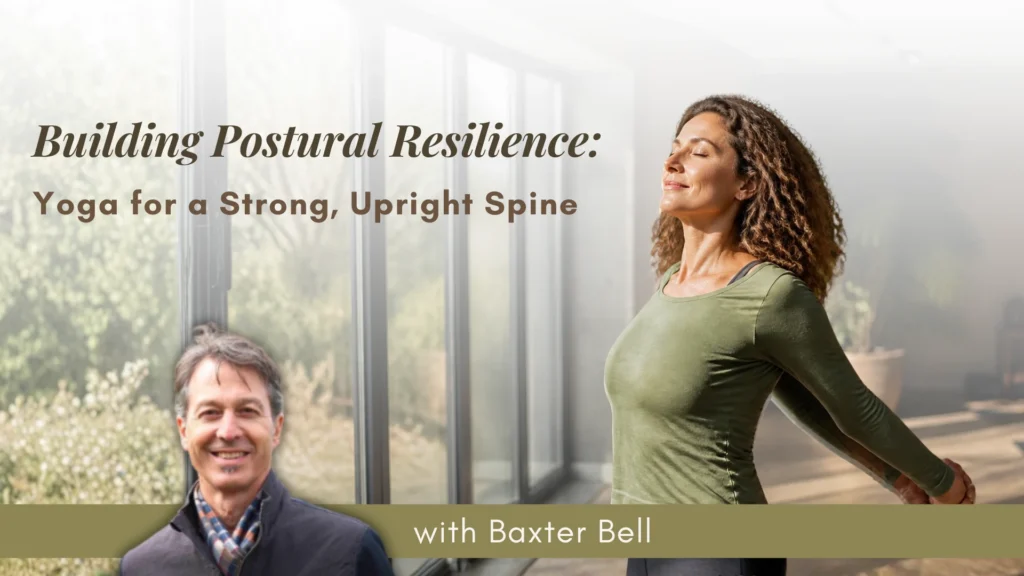
Tuesdays, April 6, 13, 20 & 27, 2027
Look around any room full of older adults, and you'll notice something: many have developed a forward curve in the upper back, sometimes called a dowager's hump. It's so common that roughly 40 percent of older adults eventually develop it.
Most people assume this is simply an inevitable part of aging — something to accept, not address. But research tells a very different story.
This postural change, known as hyperkyphosis, isn't just cosmetic. Studies link it to worse balance, slower walking speed, greater difficulty rising from a chair, and even reduced lung capacity. People with pronounced hyperkyphosis are about twice as likely to fall as their peers, and severity has even been linked to higher long-term mortality.
Here's what's especially important to understand: hyperkyphosis significantly raises the risk of vertebral compression fractures, tiny collapses in the spine's vertebrae. These fractures are far more common than most people realize; roughly 25 percent of women over 50 will experience one, rising to 40 to 50 percent of adults over 80. Most go completely undiagnosed, often mistaken for ordinary back pain or arthritis.
What's especially striking is that this risk isn't just about bone density. Research shows that hyperkyphosis itself raises fracture risk independent of osteoporosis. As the upper spine curves forward, your body's center of mass shifts forward too, and biomechanical studies show this dramatically increases the compressive load on the vertebrae below with every step, every reach, every ordinary movement of daily life. In other words, posture itself becomes a mechanical risk factor for fracture, separate from bone strength. And each vertebral fracture tends to worsen the curve further, creating a cycle where poor posture and fracture risk feed each other.
The genuinely hopeful part is that this cycle can be interrupted. A randomized controlled trial at UCLA, with participants averaging 75 years old, found that six months of a specifically designed yoga program measurably improved spinal curvature, while a comparison group's posture continued to worsen over the same period. The researchers concluded that hyperkyphosis is remediable, not just manageable.
This is exactly where Building Postural Resilience comes in. Through practices that strengthen the back muscles supporting an upright spine, release chronically tight chest and hip muscles, and build awareness of shoulder and spinal alignment, you'll work directly on interrupting the mechanical cycle driving both poor posture and fracture risk.
This isn't just about standing taller, though that's a welcome benefit. Better posture means better balance, easier breathing, and meaningfully lower fall and fracture risk, protecting your independence and confidence in the years ahead. Best of all, you'll walk away with simple, practical habits that support an upright, resilient spine for life.