Why Flexibility May Be Your Most Underrated Superpower
We obsess over strength, cardio, and protein—and treat flexibility as a bonus for yogis and gymnasts. New research suggests it may actually be one of the strongest indicators of how long, and how well

When we talk about aging well, the same three pillars dominate the conversation: build muscle, protect your heart, and keep your bones strong.
Flexibility? Most of us treat it as a nice-to-have. Something for dancers and yogis. A minor perk that makes it easier to tie your shoes or reach the top shelf.
We may have been underestimating it all along.
In a landmark study published in the Scandinavian Journal of Medicine & Science in Sports, researchers in Brazil tracked more than 3,000 middle-aged adults—between the ages of 46 and 65—for nearly 13 years (Araújo et al., 2024). At the start of the study, they measured how flexibly each person moved across seven major joints and assigned everyone a composite score. Then they waited to see who thrived and who didn’t.
The results were striking. People who scored higher on flexibility were significantly more likely to still be alive at the end of the 13-year period, with survivors posting flexibility scores nearly 10 percent higher than those who died.
Look closer at the risk gap, and the numbers really make you sit up: among men with low flexibility scores, the risk of death during the study period was nearly twice as high. For women, it was nearly five times higher.
As Harvard Health summed up the findings: “Greater flexibility is linked with longer lives.”
More Than Touching Your Toes
At first glance, it’s easy to assume this is just a side effect of staying active. People who are more flexible tend to move more, stay functionally independent longer, and suffer fewer falls and injuries. All of that matters.
Still, flexibility isn’t a magic shield against disease, and touching your toes won’t automatically add a decade to your life. What the science increasingly suggests is something deeper: flexibility is a visible window into your biological age and systemic health.
To understand why, you have to look beneath your muscles to the connective tissue that governs how freely your body moves—your fascia.
In The Tin Man Problem, we looked at the mechanical side of fascia: how this continuous, head-to-toe web stiffens and dries out when we sit too much or move in one repetitive groove. That loss of glide starts quietly and builds over decades. In one ultrasound study comparing young adults (average age 22) with older adults (average age 69), researchers found that the fascia in the lower back was 40 to 76 percent thicker in the older group—a structural thickening that tracked directly with lost flexibility and range of motion (Wilke et al., 2019).
Here is what makes that thickening far more than a mobility problem: fascia isn’t just passive wrapping around your muscles. It is one of your body’s most important—and most overlooked—regulatory systems.
Your Body’s Overlooked “Watchman”
We are all familiar with the body’s great regulatory networks: the immune system, the cardiovascular system, the endocrine system. They constantly monitor internal conditions and make real-time adjustments to keep you in balance.
A 2024 review in Frontiers in Neurology makes the case that fascia belongs right alongside them. Far from being inert packing material, fascia functions as an active regulatory system—a whole-body “watchman” richly threaded with blood vessels, lymphatic channels, and neurotransmitter receptors that continuously gathers information and sends signals influencing pain, inflammation, immunity, and recovery.
Because of that architecture, losing flexibility costs you more than range of motion:
- It bottlenecks your lymphatic system. Every lymphatic vessel in your body runs through fascial tissue. When fascia becomes thick, dense, and chronically restricted, it exerts a direct mechanical drag on lymphatic drainage—the very system responsible for clearing cellular waste and coordinating immune defense.
- It restricts microcirculation. Reduced fascial mobility is also linked to impaired blood flow through the microscopic capillary networks that deliver oxygen and nutrients to your cells.
When your fascial web stays supple and mobile, those internal highways stay open. When it locks down, the quiet housekeeping your body relies on every day starts to slow down with it.
The Stress Loop Living Under Your Skin
There is a second reason flexibility has such an outsized effect on how you feel day to day—and it has nothing to do with your joints.
Your fascial network is one of the richest sensory organs in your body, packed with an extraordinary density of nerve endings constantly reporting back to your brain (Tesarz et al., 2022). Many of those receptors are wired directly into your autonomic nervous system—the master switch that decides whether you stay in high-alert stress mode or shift into rest and repair.
When fascia becomes chronically tight and restricted, those nerve receptors stay subtly triggered, keeping your nervous system in a low-grade state of alarm even when there is no actual threat in the room (Schleip, 2024; Bordoni & Simonelli, 2018).
Dr. Robert Schleip’s research has shown that this fascial–autonomic feedback loop runs in both directions. When you are under chronic stress, your muscles brace, your breathing turns shallow, and underneath it all, your fascia physically tightens. Once it tightens, it sends tension signals right back to your brain that reinforce the stress response. Body and mind get locked in a self-reinforcing loop.
Most of us assume that feeling perpetually tense, wound up, or depleted is purely mental. Often, it is living in our fascia.
This is also why a slow, mindful stretching session or yoga class can genuinely shift your mood—not just loosen your hamstrings. Practices that restore fascial mobility send a clear, body-wide message through that sensory network: the threat is over; the body is safe; you can let go now.
Training Flexibility as Maintenance, Not Performance
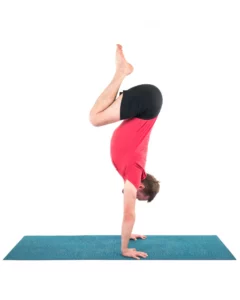
If the goal of flexibility isn’t to put your foot behind your head, how do you actually train it to support this regulatory system?
The good news is that unlike worn-out joint cartilage, fascial tissue responds remarkably well to the right mechanical input—at any age. Slow, sustained, multi-directional stretching triggers measurable remodeling inside the tissue, encouraging cells to reorganize collagen fibers and restore fluid glide (Langevin, 2021).
Not all movement delivers that signal equally, though. Fast, repetitive workouts mostly train contractile muscle fibers and do relatively little for the fascial matrix itself. To keep your fascial web open and responsive, focus on four qualities:
- Slow, three-dimensional movement: Reaching, spiraling, and bending across multiple angles rather than repeating the same straight-line patterns.
- Sustained holds: Gentle stretches held for 90 seconds or longer, giving dense connective tissue the time it actually needs to yield and rehydrate.
- Whole-body continuity: Movements that lengthen long, connected chains from feet to fingertips instead of isolating one muscle at a time.
- Gentle, rhythmic loading: Soft swaying, pulsing, or buoyant transitions that stimulate fascia’s natural springiness and encourage fluid exchange.
Yoga—especially when practiced with connective tissue in mind—checks all four boxes. The slow transitions, spiraling shapes, sustained holds, and full-body integration create the exact conditions your fascial network needs to stay supple, hydrated, and calm.
Think of it not as a flexibility performance, but as essential maintenance for the hidden system that connects your movement, your circulation, and your nervous system.
Reclaiming Your Most Underrated Superpower
When you see flexibility through the lens of modern fascia research, it stops looking like an optional add-on for the naturally bendy. It becomes a foundational pillar of healthy aging—right alongside strength and endurance.
You don’t need to be able to do the splits to reap the benefits. You just need to keep your connective tissue web moving, breathing, and gliding across all the angles it was built for. Lose your flexibility, and you lose far more than the ability to touch your toes. Keep it, and you protect the quiet biological systems that keep you resilient for the long haul.

Also, read...
Why Flexibility May Be Your Most Underrated Superpower
Learn to Forgive, For Health and Happiness
Yoga for Kids: Helping Children Suffering from Chronic Stomach Pain
Related courses
Join Our Age Strong Community – More Courses Coming Soon!
How Not to Be Present: Understanding the Power of Mind and Consciousness
Eva Norlyk Smith, Ph.D., C-IAYT, is the founder and President of YogaUOnline. She is a lead trainer in YogaUOnline’s Yoga Wellness Educator program, an RYT-300 Yoga Alliance-approved training that focuses on giving teachers the skills they need to offer wellness courses and work with older beginners.
Eva is a trained yoga therapist at the 1,000-hour level as well as a trained bodyworker at the 500-hour level. She is the co-author of several books, including Light Years Younger with Dr. David J. Goldberg.
References
- Araújo, C. G. S., de Souza e Silva, C. G., Kunutsor, S. K., et al. (2024). Reduced body flexibility is associated with poor survival in middle-aged men and women: A prospective cohort study. Scandinavian Journal of Medicine & Science in Sports, 34(8), e14708.
- Bordoni, B., & Simonelli, M. (2018). Emotions in motion: Myofascial interoception. Complementary Medicine Research, 24(2), 110–115.
- Frontiers in Neurology. (2024). Fascia as a regulatory system in health and disease. Frontiers in Neurology, 15, 1458385.
- Langevin, H. M. (2021). Fascia mobility, proprioception, and myofascial pain. Life, 11(7), 668.
- Schleip, R. (2023). The fascia connection: Keys to enhancing flexibility and mobility. YogaUOnline webinar series.
- Schleip, R. (2024). Fascia as a sensory and emotional organ. Pro-Osteo International Congress lecture series.
- Tesarz, J., et al. (2022). Fascial innervation: A systematic review of the literature. Frontiers in Neuroanatomy, 16, 981426.
- Wilke, J., Macchi, V., De Caro, R., & Stecco, C. (2019). Fascia thickness, aging and flexibility: Is there an association? Journal of Anatomy, 234(1), 43–49.