The Real Engine of Boat Pose Is Your Whole Spine, Not Just Your Abs
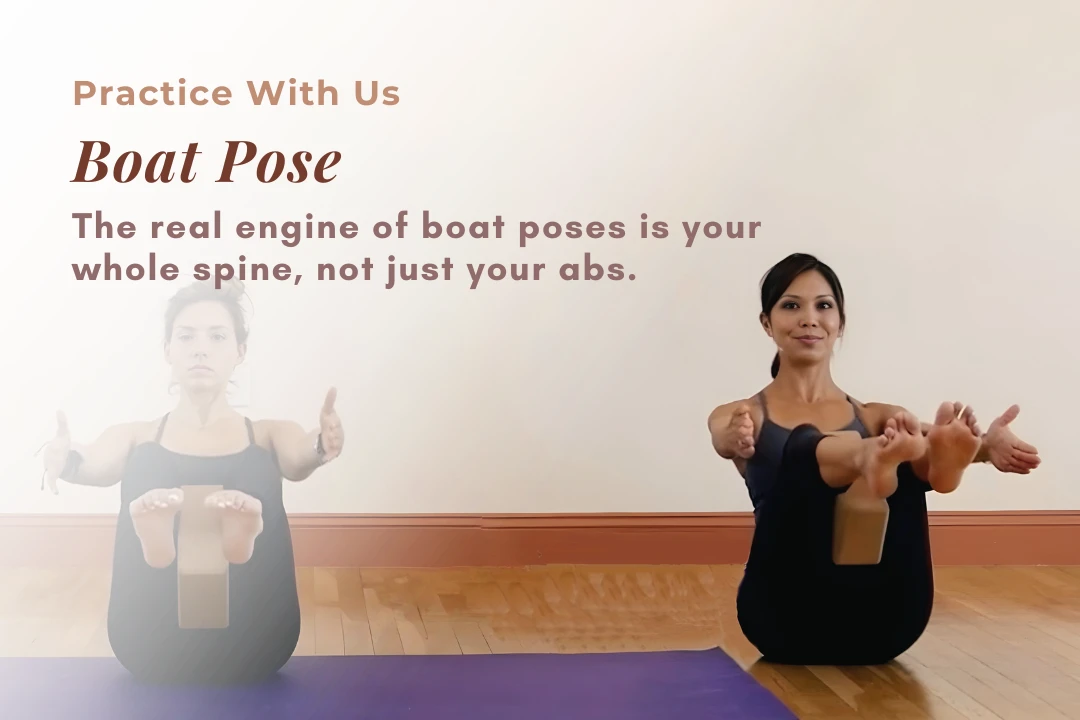
When most of us settle into Boat Pose (Navasana), we brace for an ab burn and wait for it to be over. We think of it as a stomach exercise, plain and simple. Yet the practitioners who feel steady and tall in this pose know something the rest of us miss. Boat Pose draws on your whole spine, your hip flexors, and the muscles of your back, all working together. Your abdominals are part of the picture, but they were never meant to do the job alone.
Why Boat Pose Asks for Your Back Body, Too
Picture the shape the pose is named for. A boat needs a keel and a hull, not just one taut surface. In the same way, Navasana asks the front and back of your torso to share the load. When you reach your chest up and forward, the muscles along your spine engage to keep you lifted. This is why the pose feels so different once your back joins in. Instead of collapsing behind your sitting bones, you find a long, supported line. That length is what turns a wobbly hold into a genuinely stable one, and it protects your lower back along the way.
How Jasmine Sets You Up to Succeed
In this tutorial, Jasmine Punzalan builds the pose in layers so you can find that whole-body engagement step by step. She places a block between your thighs first, which gives your legs a clear job and keeps your hip flexors from gripping to take over. From there, she offers three accessible levels. You can hold behind your knees for support, extend your arms alongside your body, or straighten your legs when your chest can stay lifted. Jasmine also adds her signature twist, a move toward Parivrtta Navasana, to bring your obliques into the work. Throughout, she returns to one simple cue: lift your chest through the gates of your arms so your spine stays engaged and your back never rounds.
A Smarter Way to Build Core Strength
Here is the shift worth carrying with you. Boat Pose becomes far more sustainable when you stop chasing the burn and start building the line. A lifted chest, an active back, and legs that reach rather than grip will give you more strength than any amount of straining ever could. The block is not a crutch; it is a teacher. It shows your body where stability actually comes from, and that lesson stays with you long after you set the block aside.
Watch Jasmine Punzalan guide you through the full tutorial below.
Ready to feel steady and strong in your core? Subscribe to our YouTube channel for more pose tutorials that reveal the whole-body actions behind every shape you practice.